 EN
EN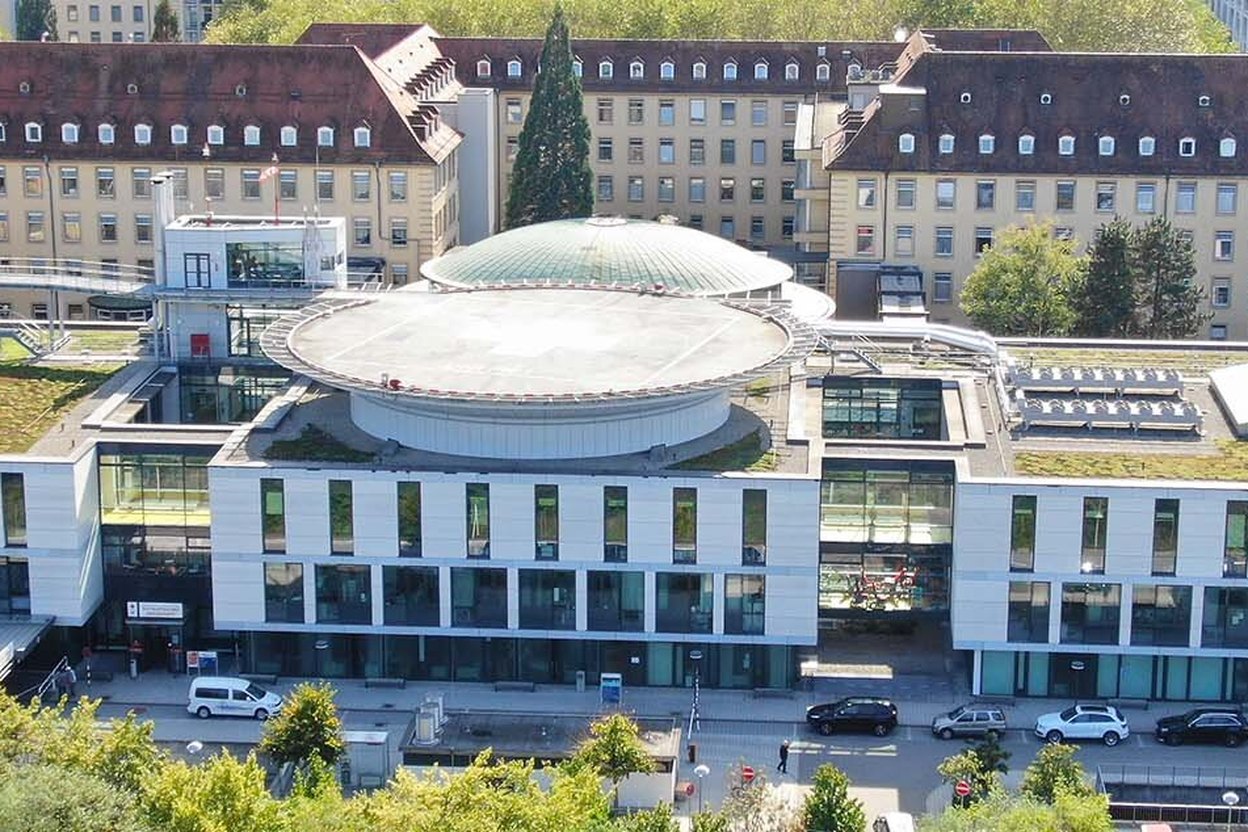
History and Founding
Medical tradition in Freiburg traces its origins back to the middle of the eighteenth century. In 1751, the medical faculty of the local university took responsibility for patient care at the poor house in the Gerberau district, and in 1780, the General Hospital was established in the Collegium Sapientiae on Herrenstraße. As the demand for expanded medical facilities grew, the Clinical Hospital was opened on Albertstraße in 1829. During the late nineteenth and early twentieth centuries, a dedicated institute quarter was developed, leading to the sequential opening of specialized clinics for gynaecology, ophthalmology, paediatrics, surgery, and outpatient care. In 1887, a psychiatric clinic was opened in the Herdern district, followed by a dermatology facility in the same area.
Between 1926 and 1931, new buildings for the medical and surgical departments were constructed on Hugstetter Straße, while nursing care was long supported by the Vincentian Sisters. A distinctive architectural feature of the medical complex is the sculptural cycle titled «The Ages of Life», created between 1938 and 1939, which adorns the central archway of the clinic to this day. During the Second World War, a severe air raid in November 1944 destroyed nearly all university medical buildings. Reconstruction took place between 1948 and 1953, restoring the surgical, medical, and gynaecological facilities to full operation. Today, thorough diagnostics in Germany at the Freiburg complex build upon centuries of academic tradition and clinical expertise.
Departments and Specialisations
The medical structure of the University Hospital Freiburg encompasses a wide range of specialized departments and theoretical institutes. Complex medical conditions involving internal organs or oncological diseases are managed through interdisciplinary tumour boards and clinical conferences that combine the expertise of surgeons, radiologists, and oncologists. Patients who require targeted cancer treatment in Germany benefit from advanced molecular genetic profiling and cell therapy methods developed within the hospital’s research divisions. In abdominal conditions, visceral surgeons collaborate closely with specialists in gastroenterology treatment in Germany to plan minimally invasive procedures and post-operative care.
- Department of General and Visceral Surgery (Klinik für Allgemein- und Viszeralchirurgie)
- Department of Ophthalmology (Klinik für Augenheilkunde)
- Department of Anaesthesiology and Intensive Care (Klinik für Anästhesiologie und Intensivmedizin)
- Institute for Cell and Gene Therapy (Institut für Zell- und Gentherapie)
- Institute for Medical Microbiology and Hygiene (Institut für Medizinische Mikrobiologie und Hygiene)
- Institute of Virology (Institut für Virologie)
- Institute for Clinical Chemistry and Laboratory Medicine (Institut für Klinische Chemie und Laboratoriumsmedizin)
- Institute of Human Genetics (Institut für Humangenetik)
- Institute of Neuropathology (Institut für Neuropathologie)
- Institute for Performing Arts Medicine (Institut für Musikermedizin)
The Department of Ophthalmology plays a significant role in providing specialized micro-invasive interventions for complex ocular conditions, supporting international patients who seek high-precision eye treatment in Germany. The presence of specialized research facilities, such as the Institute of Virology, the Institute of Human Genetics, and the Institute of Neuropathology, allows doctors to perform precise laboratory testing and diagnostic clarification for rare or challenging health conditions. Close collaboration between research laboratories and operating units ensures that clinical findings are promptly integrated into treatment strategies for maximum therapeutic benefit.
Doctors at the Clinic
The medical leadership at Freiburg University Hospital comprises prominent medical scientists and professors who head individual departments and research institutes. The clinical leadership includes Prof. Dr. Philipp Henneke, Prof. Dr. Georg Häcker, Prof. Dr. Annette Thierauf-Emberger, Prof. Dr. Toni Cathomen, Prof. Dr. Hartmut Hengel, Prof. Dr. Jürgen Beck, and Prof. Dr. Tobias Wengenmayer. Their ongoing academic research and clinical management ensure high standards of patient care, active involvement in international scientific studies, and expert supervision over complex diagnostic and treatment protocols.
Location and Access
The Freiburg University Hospital complex is situated in the city of Freiburg im Breisgau, located in southwestern Germany near the borders of France and Switzerland. The hospital facilities are distributed across four main campus sites, creating a well-structured urban infrastructure for inpatient and outpatient medical care. Freiburg is known for its mild regional climate and efficient public transport system, allowing easy access to clinic sites via local tram lines, buses, and regional train connections from the central railway station. The nearest international airports supporting international travel are located in Basel, Strasbourg, and Frankfurt am Main.
The exact address of the assigned department and step-by-step travel instructions are delivered directly to the patient along with the official invitation letter once the appointment dates are confirmed. To ensure that the journey proceeds smoothly without unnecessary stress, AlenMed handles all travel logistics. Comprehensive services, including airport transfer and accommodation in Germany, are carefully coordinated according to the patient’s medical condition and personal preferences. Patients do not need to navigate complex hospital grounds independently, as personal drivers provide direct transportation to the appropriate clinical reception desk.
Accommodation, Meals, and Leisure
Inpatient wards at Freiburg University Hospital are designed to ensure patient comfort, safety, and privacy during medical stay. Within the framework of elective hospital services (Wahlleistung), single and double rooms are available, equipped with private sanitary facilities, adjustable hospital beds, television sets, and wireless internet access. Meals in German hospitals are arranged with flexible menu selection options, accommodating specific dietary requirements, cultural preferences, and vegetarian choices. Family members are permitted to visit during designated hours, providing essential emotional support during the recovery process.
The medical complex offers comfortable surroundings for rest and recuperation between treatments and diagnostic procedures. A library is open to patients and accompanying persons, and landscaped green park areas within the university campus provide quiet spaces for daily walks. For individuals undergoing extended stays, leisure services during treatment in Germany can be arranged to help explore the regional culture and surroundings, provided that the patient’s health condition and attending physician permit light outdoor activities.
How to Arrange Treatment
Organising medical care begins with a comprehensive review of the patient’s medical documentation. Patients submit current medical reports, MRI or CT scans, laboratory findings, and histological results. The medical coordinators at AlenMed transmit these documents to the clinical specialists at Freiburg for evaluation and treatment planning. Based on the proposed diagnostic or surgical plan, the clinic issues an official cost estimate (Kostenvoranschlag). Detailed information regarding the cost of treatment and payment in Germany is provided in this official financial overview, detailing planned medical interventions and estimated hospital stay.
Upon payment of the initial deposit directly into the official bank account of the university hospital, the facility issues an official invitation required for obtaining a medical visa. The team at AlenMed provides complete support throughout the process, where professional arranging medical treatment in Germany covers visa documentation, travel arrangements, and appointment scheduling. During the patient’s stay in Freiburg, a qualified medical interpreter in Germany provides accurate translation during consultations, medical rounds, and diagnostic examinations.
Submit Medical Documents
If you or your family member require expert medical consultation or specialized hospital treatment, you can send us your medical records and diagnostic images. The AlenMed team will organize a prompt review by university specialists, prepare an official request to Freiburg University Hospital, and assist with every step of your travel arrangements. You can request a free initial evaluation of your medical documents by filling out the online form to submit a request for treatment.