 EN
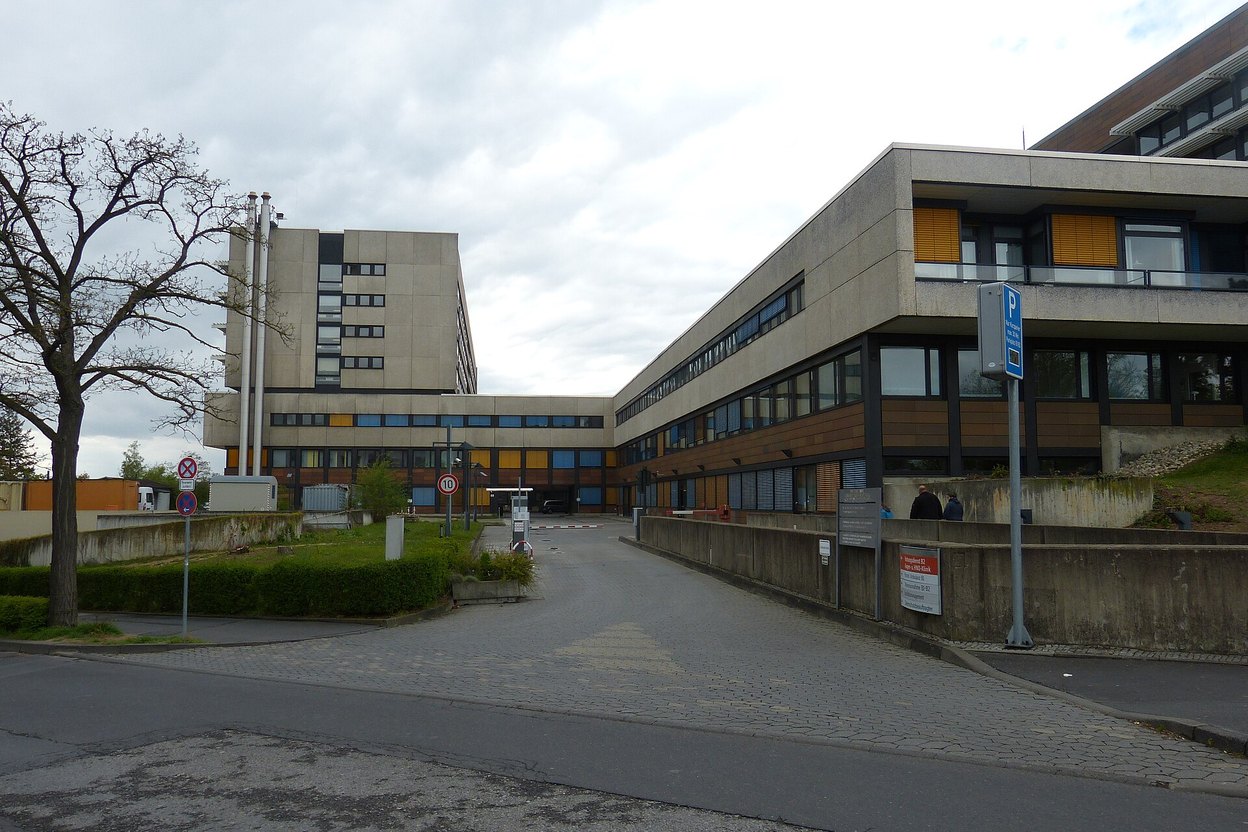
When patients abroad search for a Wurzburg hospital, they usually mean University Hospital Würzburg (Universitätsklinikum Würzburg, UKW), the hospital of the medical faculty of Julius-Maximilians-Universität and a maximum-care hospital (Krankenhaus der Maximalversorgung). Maximum care is the highest level of German hospital care: these hospitals take on the most complex and rarest cases.
For a patient from abroad, what matters most is that many narrowly specialised centres for rare and complex conditions sit in one place. Our page on university hospitals in Germany explains how they differ from other hospitals.
History: Four Centuries of University Medicine in Würzburg
University medicine in Würzburg has more than 400 years of history: in 1581 the medical faculty and the Juliusspital hospital were combined, creating the first model of a university hospital. Alongside Prague, Heidelberg, Vienna, Cologne, Leipzig and Erfurt, Würzburg is one of the oldest university towns in the German-speaking world. In 1583 the Juliusspital opened its first ward for psychiatric patients; the city’s first psychiatric clinic followed there in 1833 and received a new building in 1981. In 1816 Johann Georg Heine opened the first orthopaedic institution on German soil in the former monastery of St. Stephen.
In 1840 Würzburg set up a separate children’s ward with two rooms and 15 beds, and in 1850 Franz von Rinecker founded the world’s first university children’s clinic here. In 1845 Würzburg established the second chair of pathological anatomy in the German-speaking world; Vienna had created the first a year earlier.
Specialised Centres at the Wurzburg Hospital in Germany
The hospital’s interdisciplinary centres bring doctors of different specialties together around one group of conditions, from illnesses of old age to rare inherited disorders. German names help when searching the hospital’s website.
- Centre for Geriatric Medicine (Zentrum für Altersmedizin, ZAM)
- Centre for Neuroendocrine Tumours (Zentrum für Neuroendokrine Tumoren)
- Centre for Rare Diseases Northern Bavaria (Zentrum für Seltene Erkrankungen, ZESE)
- Centre for Achalasia and Other Oesophageal Motility Disorders (Zentrum für Achalasie und andere Ösophagus-Motilitätsstörungen)
- Centre for Malignant Hyperthermia (Zentrum für Maligne Hyperthermie)
- Centre for Primary Immunodeficiencies and Autoinflammatory Diseases (Zentrum für Primäre Immundefekte und Autoinflammatorische Erkrankungen)
- Centre for Personalised Medicine (Zentrum für Personalisierte Medizin, ZPM)
- Centre for Interdisciplinary Pain Medicine (Zentrum für interdisziplinäre Schmerzmedizin, ZiS)
- Centre for Mental Health (Zentrum für Psychische Gesundheit, ZEP)
- Research units without patient care: Centre for Experimental Molecular Medicine (ZEMM), Centre for Infection Research (ZINF)
Neuroendocrine tumours grow from hormone-producing cells; see also cancer treatment in Germany. In achalasia, the lower oesophagus does not relax and food gets stuck. Malignant hyperthermia is a rare, dangerous reaction to certain anaesthetics that runs in families; the centre tests for susceptibility with genetic analysis and a muscle sample. How certified cancer centres work in Germany is explained, in German, by the Krebsinformationsdienst of the German Cancer Research Center.
The Centre for Rare Diseases is for people who have lived for years without a clear diagnosis despite detailed examinations. Doctors review the submitted records and test results, an interdisciplinary panel discusses the case, and the patient receives a doctor’s letter with findings and treatment recommendations. Bring all discharge letters, test results (including any genetic tests) and CT and MRI scans on disc.
Doctors at University Hospital Würzburg
The medical director and chairman of the board of University Hospital Würzburg is Prof. Tim von Oertzen. Prof. Heike Rittner is spokesperson of the Centre for Interdisciplinary Pain Medicine (ZiS) and heads the chair of pain medicine; she is also qualified in palliative medicine and special pain therapy. At the Centre for Cellular Immunotherapy (ZenITh), Prof. Matthias Eyrich heads cell therapy, the GMP laboratory and the haematology laboratory; GMP means cells are prepared under the strict rules that apply to medicines.
PD Dr Philipp Schendzielorz heads the Interdisciplinary Centre for Healthy Sleep (IZGS) and the ENT sleep laboratory; see also sleep disorder treatment. The senior consultants of the Centre for Rare Neuromuscular Diseases are Prof. Claudia Sommer and Prof. Nurcan Üçeyler. Prof. Üçeyler’s fields include small-fibre neuropathy, damage to the thinnest nerve fibres that causes pain and burning, and Fabry disease, a rare inherited metabolic disorder. Prof. Kathleen Wermke heads the Centre for Pre-Speech Development and Developmental Disorders (ZVES); she is a biologist and anthropologist, not a physician.
Getting to the Hospital and Staying There
The hospital lies in Würzburg, in northern Bavaria on the river Main. Its campus has many buildings, so patients travelling to a Wurzburg hospital in Germany receive the exact address of their department and a site plan with the invitation.
The grounds include green areas with seating for patients and visitors. Relatives may visit, ideally outside mealtimes and rest periods. The room category and any extra services are listed in the estimate. Transfers and accommodation for companions are arranged through our airport pick-up and accommodation service.
Frequently asked questions
Can international patients be treated at University Hospital Würzburg?
Yes, if the relevant centre agrees to take on the case after reviewing the records. Translated discharge letters and scans go to the hospital, its doctors give a preliminary assessment, and the hospital issues a cost estimate. The patient pays it directly to the hospital and receives an invitation for the visa.
How much does treatment at University Hospital Würzburg cost?
There is no fixed price: the hospital states the amount in a cost estimate (Kostenvoranschlag) once its doctors have reviewed the records and outlined a plan for diagnostics or treatment. The estimate lists examinations, procedures, days in hospital, the room category and any extra services. Payment goes directly to the hospital’s account.
Does University Hospital Würzburg treat children?
Yes. Its children’s hospital traces its roots to the world’s first university children’s clinic, founded in 1850. The centres include a paediatric cancer centre (Kinderonkologisches Zentrum), and the Centre for Pre-Speech Development (ZVES) analyses the sounds babies make from birth to spot an early risk of speech development disorders.
How AlenMed Arranges Treatment at University Hospital Würzburg
AlenMed prepares the records and handles correspondence with the hospital: discharge letters, lab results and digital CT and MRI scans are translated into German and sent to the relevant centre for a preliminary assessment. AlenMed is an independent company, not a branch of University Hospital Würzburg.
If the hospital agrees to admit the patient, it issues a cost estimate (Kostenvoranschlag), paid directly to the hospital, and then an invitation for the visa. An interpreter accompanies the patient at consultations and ward rounds. The company’s office is in Munich.
This material is for reference only and is not an offer. The treatment plan is decided by a doctor at a face-to-face consultation.