 EN
EN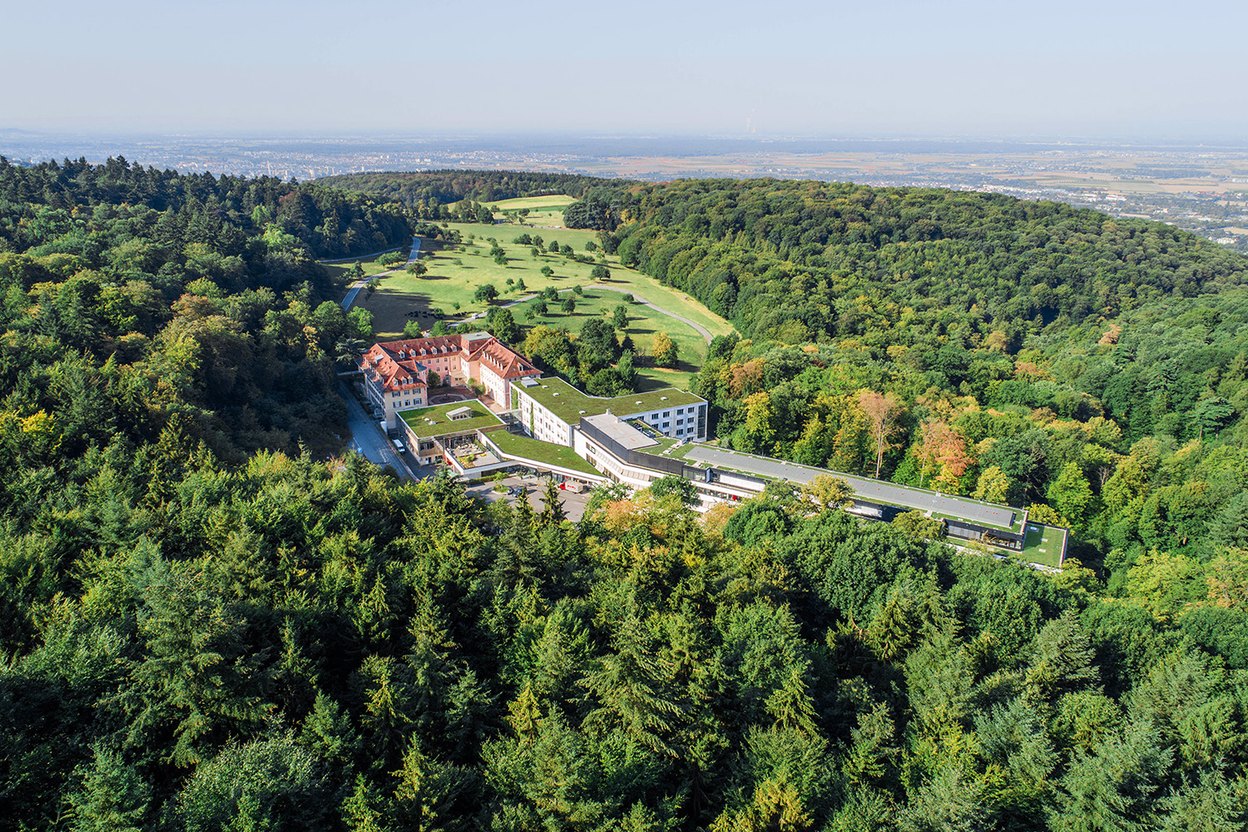
Kliniken Schmieder is a specialized medical center network headquartered in Allensbach on the shores of Lake Constance in Baden-Württemberg. The medical facility focuses on comprehensive post-stroke recovery, rehabilitation after severe traumatic brain and spinal cord injuries, post-neurosurgery care, and management of progressive neurological conditions such as multiple sclerosis and Parkinson’s disease. The rehabilitation process covers all phases from early intensive recovery to outpatient adaptation. By combining clinical treatment with academic research in neuroplasticity, the center tailors therapy programs to the specific functional impairments of every individual patient. AlenMed assists international patients in organizing structured programs for neurological rehabilitation in Germany across specialized German facilities.
History and Foundation
The clinic was founded in 1950 by Dr. Friedrich Schmieder in Gailingen am Hochrhein as a specialized facility dedicated to recovering patients with central and peripheral nervous system damage. As demand for specialized neurological rehabilitation expanded across the region, the organization broadened its infrastructure, establishing its central administrative headquarters in Allensbach in 1974. Over subsequent decades, additional clinical locations opened in Konstanz, Stuttgart, Gerlingen, and Heidelberg. Today, the hospital network remains a private family enterprise managed by the second and third generations of the Schmieder family. To explore other specialized centers across the country, patients can review our overview of hospitals in Germany.
A pivotal milestone in the hospital network’s history occurred in 1991 when Kliniken Schmieder introduced neurological early rehabilitation for severely affected patients suffering from impaired vital functions. The institution was among the early facilities in Europe to establish specialized units equipped for recovering patients emerging from comas or requiring mechanical ventilation. In the same year, the clinic established its internal training institute ZENITH to provide continuous education for specialized medical staff. In 1997, the non-profit Schmieder Foundation established the Lurija Institute for Rehabilitation Sciences in Allensbach, conducting academic research in close collaboration with the Universities of Freiburg, Konstanz, Heidelberg, Tübingen, and Magdeburg to advance cognitive and motor recovery methods.
Departments and Specialties
- Centre for Sleep Medicine (Zentrum für Schlafmedizin)
- Institute for Rehabilitation Sciences and Health Research (Institut für Rehabilitationswissenschaften und Gesundheitsforschung)
- ZENITH Training Institute (ZENITH, klinikeigenes Weiterbildungsinstitut)
- Early and Post-Acute Neurological Rehabilitation Units (Phases B, C, D, E)
Clinical therapy follows the structured phase system established within German neurological medicine. Phase B covers early rehabilitation for severely affected patients admitted directly from intensive care units who require continuous monitoring of vital parameters and ongoing respiratory support. As patients regain basic self-care capabilities, treatment transitions into Phase C and Phase D, where clinical efforts shift toward recovering independent walking, fine motor coordination, speech, and cognitive skills necessary for daily life. The facility provides specialized care for complex conditions, delivering targeted neurology treatment in Germany. Seamless transition between phases allows therapeutic intensity to adjust dynamically as functional recovery progresses.
The Centre for Sleep Medicine (Zentrum für Schlafmedizin) forms an integral part of the clinical infrastructure, providing diagnostics and therapy for sleep-disordered breathing, restless legs syndrome, and severe insomnia. Restorative sleep is essential for neuroplasticity and neural tissue repair, making sleep diagnostics an invaluable component of complex recovery programs. In parallel, the Institute for Rehabilitation Sciences and Health Research conducts systematic studies on clinical outcomes. Research efforts focus on evaluating robot-assisted gait therapy, neuromuscular electrical stimulation, and targeted neuropsychological training designed to restore memory, executive functions, and spatial orientation following cerebral lesions.
Doctors at the Clinic
The medical departments are led by experienced specialists in neurology and neurorehabilitation. The position of Chief Physician (Chefarzt) is held by Prof. Dr. med. Michael Jöbges. Under his clinical leadership, interdisciplinary teams consisting of neurologists, intensive care specialists, physiotherapists, occupational therapists, speech pathologists, and neuropsychologists work together on daily patient care. Rehabilitation plans are reviewed continuously during interdisciplinary case conferences, allowing specialists from different disciplines to adjust therapeutic protocols and medication schedules. This structured collaborative approach ensures that motor deficits, cognitive challenges, and secondary medical conditions receive equal attention throughout the recovery process.
Where the Clinic Is Located
The main administrative and clinical complex of Kliniken Schmieder is located in the municipality of Allensbach, situated on the scenic shores of Lake Constance in southern Baden-Württemberg. The mild microclimate and peaceful natural surrounding lake area provide a quiet setting that supports long-term neurological recovery. Situated away from dense urban industrial centers, the location minimizes external sensory overload, allowing patients to focus fully on their therapeutic schedules. For individuals recovering from stroke or traumatic injuries, outdoor mobility practice along barrier-free paths near the lake serves as a meaningful extension of indoor physiotherapy sessions.
Allensbach offers convenient transport connections for incoming patients and accompanying family members. The municipality features a regional railway station (Bahnhof) connected to the broader German rail network. International travelers typically arrive via Zurich Airport or Stuttgart Airport, continuing their journey to Allensbach by train or direct private vehicle transfer. As part of our comprehensive services for arranging medical treatment in Germany, AlenMed coordinates personal transfers from arrival terminals directly to the hospital doors. The precise street address and step-by-step route directions are provided to the patient within their official arrival documentation alongside their formal medical invitation letter.
Accommodation, Dining, and Leisure
Inpatient accommodation is designed to meet the technical and safety needs of individuals with reduced physical mobility. Patient rooms feature specialized adjustable hospital beds, emergency nurse call systems, and barrier-free accessible bathrooms. As an elective paid service, the clinic offers upgraded accommodation options (Wahlleistung), including private single or double rooms with enhanced furnishings and amenities. Dining plans are carefully tailored to medical requisites: patients suffering from swallowing disorders (dysphagia) receive customized textured meals, while clinical nutritionists monitor daily caloric intake and nutrient balances to support tissue recovery and physical endurance during intensive training.
The clinic maintains scheduled visiting hours (Besuchszeit), encouraging family members (Angehörige) to remain close, offer emotional support, and participate in family education training sessions. The surrounding grounds include a landscaped park (Park) equipped with accessible paved paths, rest areas, and lakeside viewpoints. To help patients stay connected with relatives back home, wireless internet access (WLAN) is available throughout the clinical facilities. Thoughtfully arranged leisure environments and quiet recreation areas allow patients to rest effectively between demanding therapeutic sessions, maintaining high motivation and psychological well-being throughout their stay.
How to Arrange Treatment
To request admission for neurological rehabilitation at Kliniken Schmieder, patients or their family representatives must provide comprehensive medical reports, past neurological discharge summaries, and recent MRI or CT neuroimaging scans. The hospital’s medical team evaluates the submitted records to assess rehabilitation potential and outline an initial therapeutic strategy. Based on this medical plan, the financial department generates an official cost estimate (Kostenvoranschlag). All medical expenses are settled directly with the clinic’s official bank account without additional surcharges or intermediary markups, ensuring complete financial transparency throughout the process.
AlenMed handles every stage of organizational preparation for international patients traveling to Germany. Our team assists with securing a medical visa for Germany for both the patient and accompanying relatives, arranges professional translation of medical records, and coordinates accommodation booking. Throughout the rehabilitation stay, patients are supported by an experienced medical interpreter in Germany who assists during physician ward rounds, diagnostic assessments, and daily therapy sessions. This continuous support removes communication barriers and lets patients concentrate entirely on their health recovery.
Submit Medical Documents
If you or your loved one requires specialized neurological rehabilitation at Kliniken Schmieder, please send your recent medical summaries and diagnostic imaging through our contact form. AlenMed specialists will promptly transmit your medical file to German doctors for clinical review and prepare an initial cost estimate for your rehabilitation program.
This page is provided for informational purposes only and does not replace professional medical advice or consultation. Specific rehabilitation timelines, individual treatment plans, and final medical costs are calculated individually by the hospital in an official cost estimate (Kostenvoranschlag) after reviewing the patient’s full medical documentation.