 EN
EN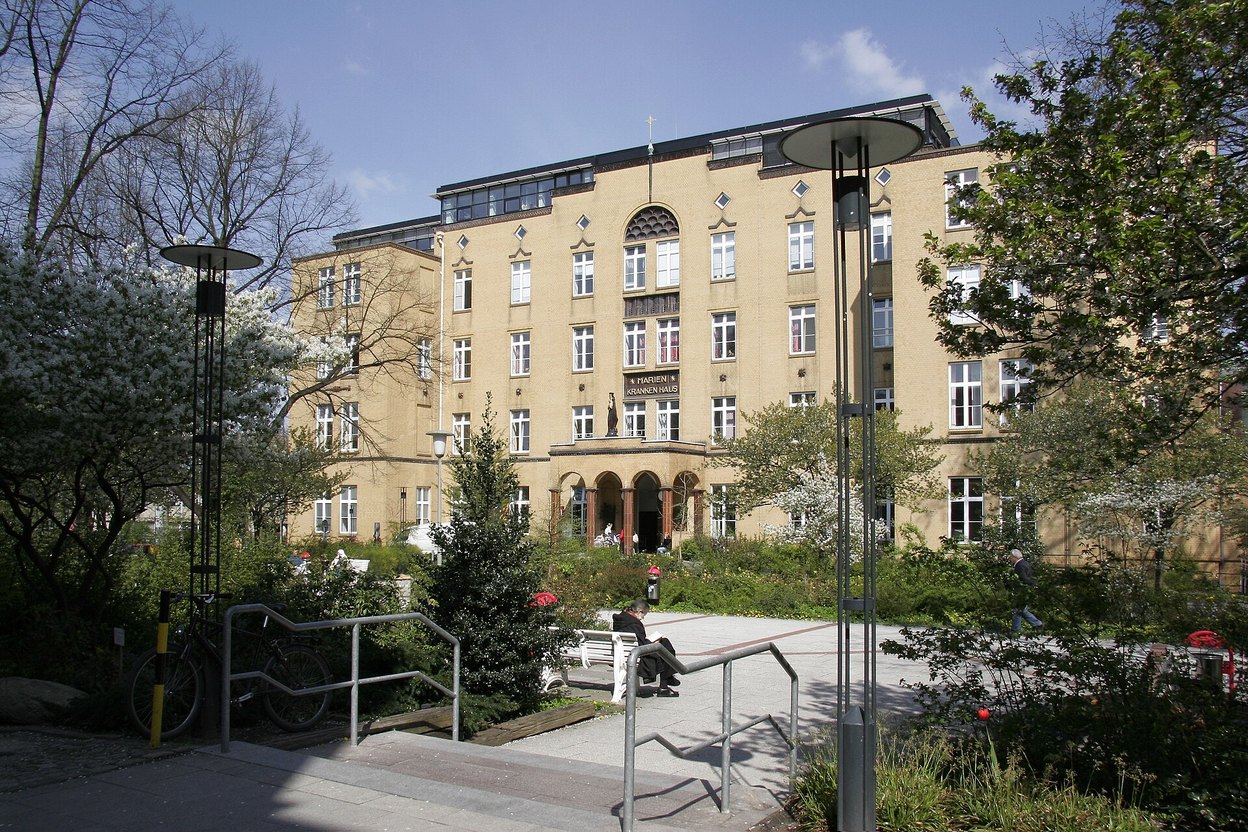
Marienkrankenhaus Hamburg is a established Catholic hospital located in the Hanseatic city of Hamburg, providing structured medical care across internal medicine, surgery, obstetrics, and gynaecology. As part of the Ansgar-Gruppe hospital network alongside the Wilhelmstift children’s hospital and Marien-Krankenhaus Lübeck, the institution offers a continuous spectrum of interdisciplinary healthcare for patients of all ages. For international individuals seeking hospitals in Germany, this medical center combines precise diagnostic capabilities, specialized therapeutic units, and a supportive healing environment. Patients who travel to Hamburg benefit from high professional standards, individualized treatment planning, and modern surgical procedures. The hospital’s long-standing tradition of compassionate care ensures that patients feel well-supported throughout their diagnostic evaluation and inpatient stay.
History and Foundation
The institutional origin of this medical complex traces back to 1925, when the Hamburg Catholic Association for Women, Girls, and Children established a dedicated care facility in the city. To secure its ongoing operation, ownership was subsequently transferred to the Diocese of Osnabrück, where Bishop Hermann Wilhelm Berning actively championed the welfare of the institution, leading to the name Wilhelmstift. By 1927, the facility expanded to include specialized infant care services, which were officially inaugurated in 1928. In 1930, dedicated maternity rooms were integrated to enable births directly on site, and from 1936 onwards, the hospital expanded its mandate to care for pediatric patients suffering from severe medical conditions.
During the Second World War in 1943, operations were temporarily disrupted, forcing staff and patients to evacuate the premises before services could be successfully resumed in 1945. In response to severe shortages of inpatient pediatric capacity across Hamburg, 36 dedicated hospital beds for children were added in 1947. Rapid growth required a new hospital building, which was initiated in 1955 and inaugurated in 1956. The hospital strengthened its specialized capacity by acquiring the Walddörfer children’s hospital in 1982, fully integrating both facilities by 1992. In 1995, institutional sponsorship transitioned to the newly established Archdiocese of Hamburg, forming the structural foundation of today’s healthcare network.
Departments and Medical Specialties
- Department of Geriatrics, Rheumatology, and Diabetology (Klinik für Geriatrie)
- Department of Gynaecology and Obstetrics (Klinik für Gynäkologie)
- Department of Trauma Surgery and Orthopaedics (Klinik für Unfallchirurgie und Orthopädie)
- Institute of Pathology (Institut für Pathologie)
- Institute of Radiology (Institut für Radiologie)
In the Department of Geriatrics, clinicians specialize in managing age-related multi-organ conditions, rheumatic disorders, metabolic dysfunction, and complex complications associated with diabetes mellitus. Elderly patients requiring comprehensive diagnostics in Germany receive detailed cardiovascular evaluations, metabolic profiling, and tailored therapeutic regimes designed to maintain independence and vitality. The Department of Gynaecology provides expert care across women’s health, delivering modern gynaecology treatment in Germany through minimally invasive surgical techniques, routine preventive screening, and comprehensive obstetric care. The close collaboration between different clinical departments ensures that underlying conditions are identified early and treated in a synchronized manner.
The Department of Trauma Surgery and Orthopaedics provides comprehensive care for complex musculoskeletal injuries, acute fractures, sports-related trauma, and degenerative joint diseases. Patients seeking advanced orthopaedics and joint replacement in Germany benefit from precise surgical planning, joint-preserving procedures, and structured post-operative rehabilitation pathways. Supporting these clinical departments, the Institute of Radiology and the Institute of Pathology provide rapid diagnostic imaging and high-precision histological analysis. Advanced CT, MRI, and ultrasound imaging allow surgical teams and internists to plan procedures with accuracy and monitor healing throughout every phase of inpatient recovery.
Chief Physicians and Specialists
The clinical departments at Marienkrankenhaus Hamburg are led by experienced medical experts who hold established authority within the German medical community. Chief physicians Dr. med. Roman Feil, Dr. med. Helmut Bühre, and Prof. Ahmed Farouk Abdelkawi oversee clinical operations, surgical teams, and specialized outpatient care across their respective departments. Under their direction, interdisciplinary medical boards evaluate complex clinical cases to design personalized therapeutic plans. This structured leadership model guarantees that decisions regarding surgical intervention, pharmacological strategy, or rehabilitation are made with careful consideration of every patient’s overall health profile and specific medical goals.
Location and Accessibility
Marienkrankenhaus Hamburg is situated in Hamburg, one of Germany’s major economic and cultural centers in the northern region. The city features a highly developed international infrastructure, making travel for specialized medical treatment in Germany straightforward and convenient for international patients. Hamburg Airport operates frequent direct connections to international destinations, while the Hamburg Central Station provides fast railway access across Western Europe. This well-established transit hub ensures that arriving patients and accompanying family members can easily travel to the city without complicated transit procedures.
Navigating Hamburg is effortless thanks to an extensive public transportation network consisting of underground trains (U-Bahn), suburban commuter lines (S-Bahn), and municipal bus routes (Buslinie). Convenient access roads and dedicated visitor parking facilities are available around the hospital grounds for patients arriving by private vehicle or taxi. When planning a journey through AlenMed, international visitors do not need to worry about locating exact street addresses in advance. The exact street location, entrance guidance, and step-by-step route directions are sent directly with the official hospital invitation letter, enabling seamless travel from the airport or train station to the admissions office.
Patient Accommodation and Services
Creating a comfortable and stress-free environment is an essential priority at Marienkrankenhaus Hamburg, as physical relaxation contributes significantly to recovery after surgical procedures or intensive therapy. Within the framework of optional Wahlleistung services, patients can opt for single or double occupancy rooms that feature enhanced comfort, comfortable furnishings, and modern sanitary facilities. Meal services are carefully tailored to meet nutritional requirements and individual preferences, providing daily menu selections that accommodate dietary restrictions, vegetarian options, and specific cultural guidelines. An on-site cafeteria also offers a welcoming setting for patients and visitors to rest over coffee and light refreshments.
The surrounding hospital grounds feature a well-maintained park area where patients can enjoy quiet walks outdoors during their recovery period. To ensure constant communication with family members and business contacts back home, high-speed wireless internet access (WLAN) is available throughout the hospital wards. Visiting hours are organized flexibly, allowing relatives and close friends to spend meaningful time with patients without disturbing clinical routines or scheduled medical treatments. These thoughtful service details create an encouraging and dignified environment, helping international patients feel comfortable, safe, and focused on their personal health recovery.
Arranging Medical Treatment in Hamburg
Organizing medical care at a major hospital in Germany begins with submitting comprehensive medical records, including diagnostic reports, CT or MRI scans, laboratory tests, and recent medical summaries. Specialized medical coordinators review these documents to evaluate the clinical case and formulate an initial treatment plan. Navigating these administrative procedures is simplified through professional arranging medical treatment in Germany, which eliminates organizational delay and ensures accurate translation of medical history. The clinic issues an official cost estimate (Kostenvoranschlag), after which an official medical invitation is generated to support visa application procedures at German embassies abroad.
All medical payments are processed directly to the official bank account of the hospital, ensuring complete financial transparency without unexpected surcharges or third-party markups. Throughout their stay in Hamburg, international patients are accompanied by a qualified medical interpreter and personal support team from AlenMed. Experienced medical interpreters assist during consultations, explain surgical procedures, translate formal discharge reports, and assist with daily logistical needs. This comprehensive assistance removes language barriers, facilitates clear communication with medical staff, and provides complete confidence during every stage of medical treatment in Germany.
Submit Medical Documents for Assessment
If you wish to undergo diagnostic examination or specialized treatment at Marienkrankenhaus Hamburg, you can submit your medical records and diagnostic imaging for preliminary evaluation. Please fill out the inquiry form on our website to receive a free assessment of your medical documents from the expert team at AlenMed. Our medical coordinator will promptly review your information, answer any questions regarding travel planning, assist with document translation, and request an official cost estimate and preliminary treatment proposal directly from the specialized hospital department.
The information presented on this page is provided solely for educational and informational purposes and does not constitute a public offer or medical advice. The final diagnostic, surgical, or therapeutic plan, as well as the total treatment cost, is determined exclusively through the official hospital cost estimate (Kostenvoranschlag) following a formal review of the patient’s individual medical documentation.