 EN
EN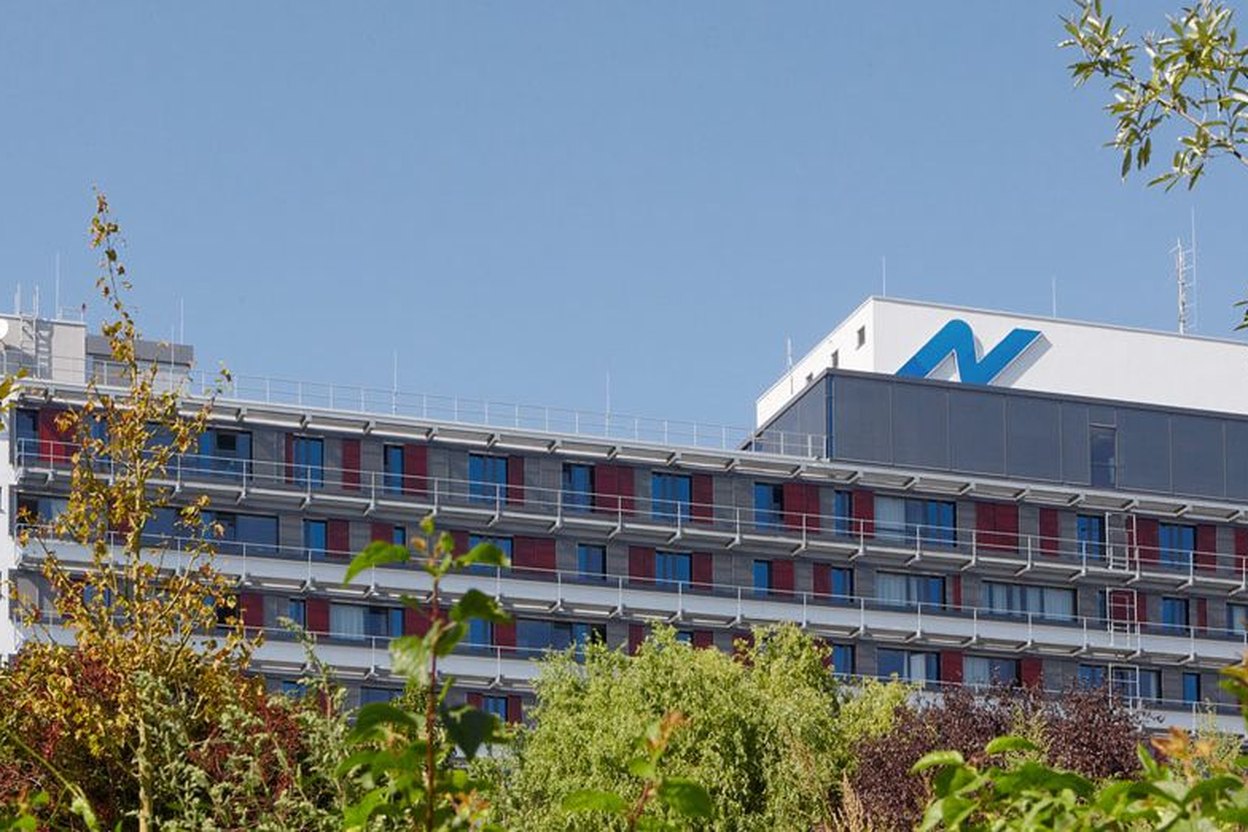
Nordwest Hospital Frankfurt (Krankenhaus Nordwest) is an academic teaching hospital of Goethe University Frankfurt am Main and an integral part of the Hospital zum Heiligen Geist foundation. Situated in Frankfurt am Main in the state of Hesse, this medical institution combines specialized departments in oncology, visceral surgery, neurology, and palliative care. For international patients seeking structured medical care, hospitals in Germany provide diagnostic evaluations, surgical interventions, and multidisciplinary treatment protocols. The clinic operates in close collaboration with university researchers, enabling clinicians to incorporate validated scientific findings and modern therapeutic standards directly into daily inpatient care.
History and Foundation Year
The history of Nordwest Hospital Frankfurt began in October 1963 when the medical facility officially opened its doors with an initial capacity of 615 inpatient beds. In 1964, construction started on the Agnes-Karll-Schule nursing school to train qualified medical staff, and by 1970, the urology department separated from general surgery to form an independent specialized clinic. A helicopter landing pad was established on the clinic grounds in 1971 to enable rapid emergency transport for acute patients across the region. During the late 1970s and early 1980s, the operating rooms underwent extensive technical modernization to support complex surgical procedures.
The hospital continued its structural development with the establishment of the radiooncology clinic in 1982 and the construction of specialized radiation bunkers in 1983 and 1991. The clinic for hematology and oncology was founded in 1992 alongside the installation of its first magnetic resonance imaging scanner. Patients undergoing an MRI scan in Germany benefit from advanced imaging technologies; the hospital added a high-field 3-Tesla MRI scanner in 2012. In 1999, a specialized stroke unit was founded and subsequently certified in 2000 as a supra-regional Stroke Unit, followed by the opening of the oncological palliative care center in 2007 funded by Deutsche Krebshilfe.
Departments and Medical Specialties
- Gastrointestinal Tumor Center (Zentrum für Gastrointestinale Tumoren)
- Center for Palliative Medicine (Zentrum für Palliativmedizin)
- Clinic for Hematology and Medical Oncology (Klinik für Hämatologie und Onkologische Medizin)
- Clinic for Radiooncology and Radiotherapy (Klinik für Radioonkologie)
- Clinic for General and Visceral Surgery (Klinik für Allgemein- und Viszeralchirurgie)
- Clinic for Urology (Klinik für Urologie)
- Clinic for Neurology and Stroke Unit (Klinik für Neurologie, Stroke Unit)
The clinical structure of the hospital revolves around specialized interdisciplinary centers where surgeons, oncologists, radiologists, and organ specialists collaborate on complex medical cases. The Gastrointestinal Tumor Center focuses on the diagnostic assessment and surgical treatment of tumors affecting the esophagus, stomach, pancreas, liver, and intestines. Patients seeking specialized gastroenterology treatment in Germany undergo detailed diagnostic workups and multidisciplinary tumor board reviews. These collaborative medical boards analyze individual pathology results and molecular markers to outline structured therapeutic strategies for every patient.
In the Center for Palliative Medicine and the hematology department, specialized clinical teams focus on managing severe malignant conditions and complex oncological cases. Pain control, symptom management, and structured supportive care are integrated to maintain physical stability whenever extended cancer treatment in Germany is required. The radiation oncology department employs modern linear accelerators for precise radiotherapy target alignment, while the certified Stroke Unit provides round-the-clock emergency medical care for patients experiencing acute ischemic strokes or other urgent neurological conditions.
Hospital Doctors
The clinical departments and specialized medical divisions are directed by experienced chief physicians and university professors. The hospital’s senior medical staff includes Prof. Dr. med. Siegbert Rossol, Prof. Dr. med. Thilo Welsch, Dr. med. Stefanie Veit, Prof. Dr. med. Elke Jäger, Prof. Dr. med. Uta Meyding-Lamadé, Dr. med. Sven Rogmans, and Prof. Dr. med. Inga Peters. Administrative management and overall clinical coordination are directed by Prof. Dr. med. Elke Jäger, ensuring that interdisciplinary standards and university teaching guidelines are maintained across all inpatient units.
Location and Accessibility
The hospital complex is situated in Frankfurt am Main, a major central transportation hub in the German state of Hesse. Frankfurt features one of Europe’s largest international airports, offering direct flight connections from major international destinations worldwide. This convenient location simplifies travel planning for foreign patients and accompanying family members. The short distance between Frankfurt Airport, the central railway station, and the medical campus allows for efficient transfers by taxi, private vehicle, or local public transport lines.
Local municipal bus lines (Buslinie) connect the clinic directly with neighboring city districts, while an on-site multi-storey parking garage (Parkhaus) is available for visitors arriving by private car. The precise street address and detailed navigation instructions are provided to patients in their official hospital confirmation letters. Comprehensive arranging medical treatment in Germany includes organizing private airport transfers, ensuring seamless transportation directly from the arrival terminal to the inpatient ward or local hotel accommodation.
Accommodation, Meals, and Amenities
Inpatient facilities in German hospitals are designed to promote physical recovery and personal comfort throughout treatment. Patients select daily meals from a structured food menu (Speiseplan) that accounts for medical dietary requirements, nutritional guidelines, and personal preferences. Standard patient rooms (Patientenzimmer) are equipped with adjustable medical beds, modern sanitary facilities, television, and wireless internet access. Under elective service programs (Wahlleistung), patients can opt for single or comfortable double rooms (Zweibettzimmer) with additional personal amenities.
Family members and relatives (Angehörige) are welcomed during designated visiting hours to offer emotional support during complex therapeutic procedures. The hospital grounds feature a landscaped park area (Park) for outdoor walks, an on-site chapel (Kapelle) for quiet reflection, and a patient library (Bibliothek). The quiet surrounding environment and attentive nursing care contribute to a supportive atmosphere during inpatient stays, helping patients maintain emotional balance throughout their treatment.
How to Arrange Treatment
The process begins with submitting recent medical documentation, diagnostic imaging, and laboratory results for expert review. German medical specialists review the clinical records to evaluate the feasibility of treatment and outline a tentative diagnostic or surgical plan. Based on this evaluation, an official cost estimate (Kostenvoranschlag) is calculated according to official German medical fee schedules. This document details the expected cost of treatment in Germany prior to travel, ensuring financial clarity.
Once payment is deposited directly into the clinic’s bank account, the hospital issues an official medical invitation required for visa processing. The AlenMed team assists at every step, preparing visa documentation and coordinating logistics. During clinical consultations and diagnostic tests, an experienced medical interpreter in Germany accompanies the patient to ensure accurate communication and complete understanding of all physician instructions.
Submit Medical Documents
If you or your family members require specialized treatment or a second opinion from German oncologists and surgeons, you can submit your medical reports through our website. AlenMed coordinators will organize a preliminary evaluation of your documents and contact the clinic’s departments promptly. To receive a detailed cost estimate and consult on organizational steps, fill out the treatment request form.
The information provided on this page is for informational purposes only and does not constitute a public offer or medical advice. The final scope of diagnostics, treatment plan, and overall costs are determined individually based on the examination of medical documents and approval of the hospital’s official cost estimate (Kostenvoranschlag).