 EN
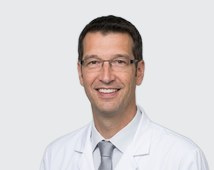
Professor Michael Uder is director of the Institute of Radiology (Radiologisches Institut) at Erlangen University Hospital (Universitätsklinikum Erlangen) and deputy medical director of the hospital. The institute covers diagnostic and interventional radiology – treatment through a needle or catheter guided by imaging. Patients are referred here for MRI, CT and other scans and for minimally invasive treatment of blood vessels and tumours.
What Professor Uder treats
Professor Uder is a radiologist; his institute performs imaging and image-guided procedures for the whole university hospital, using MRI, CT, ultrasound, digital X-ray and angiography (contrast imaging of blood vessels). Its main areas are:
- tumours: diagnosis, CT-guided biopsies, treatment through the blood vessels – chemo- and radioembolisation (TACE, SIRT) – and microwave ablation, which destroys a lesion with heat;
- breast disease: mammography, ultrasound, breast MRI and CT, biopsies;
- heart and vascular disease: cardiac CT and MRI, widening narrowed vessels with balloons and stents, clot removal;
- joint, bone and soft-tissue disease, and emergency imaging after injuries;
- blocking vessels through a catheter (embolisation): the prostate arteries for benign prostate enlargement and small joint vessels for chronic joint pain.
For background, see our pages on oncology and vascular surgery in Germany.
Training and experience
Professor Uder holds the Chair of Diagnostic Radiology (Lehrstuhl für Diagnostische Radiologie) at Friedrich-Alexander-Universität Erlangen-Nürnberg (FAU). As deputy medical director, he is part of the management of Erlangen University Hospital.
With specialists from Siemens Healthineers, he took part in developing Magnetom Free, a low-field MRI system whose 80-centimetre bore makes scans easier for children and people afraid of confined spaces. In 2025 he and Professor Martin Mack were presidents of the 106th German Radiology Congress (Deutscher Röntgenkongress).
The department and hospital
The institute works at several sites of the hospital – the internal medicine centre and the surgical, women’s and children’s hospitals. Its doctors take part in tumour boards (multidisciplinary cancer meetings), from gastrointestinal and breast tumours to sarcomas, lymphomas and childhood cancers.
Self-paying patients can be examined too, likewise with a doctor’s referral (Überweisungsschein). Images taken elsewhere can be sent online in advance, ideally with the written report, and the institute prepares expert opinions (Fachgutachten) on request. More about the hospital: Erlangen University Hospital.
Frequently asked questions
What conditions does Professor Uder treat?
Patients are referred to Professor Uder’s institute when they need precise imaging – MRI, CT, ultrasound or mammography – for tumours, heart, vascular, joint and breast disease, or after injuries. It also offers minimally invasive treatment: embolisation of the prostate arteries or joint vessels, treatment of tumours through the blood vessels and widening of narrowed arteries.
How can I see Professor Uder from abroad?
Gather your medical reports and previous scans with their written reports; the institute also accepts images online. A doctor’s referral is needed even if you pay yourself. AlenMed translates the documents into German and forwards your request; the hospital confirms a date and decides which of the institute’s doctors performs the examination or procedure.
How much does treatment with Professor Uder cost?
The exact amount is set by the hospital in a written estimate (Kostenvoranschlag) prepared before you travel, so you know the costs in advance. It depends on the examinations and procedures: an MRI of one region, a cardiac CT and a vascular embolisation are priced differently. Payment goes directly to the hospital.
How to see Professor Uder through AlenMed
AlenMed translates your records and imaging reports into German, agrees a date with the hospital and, if needed, arranges a medical interpreter and personal support. To start, send a request through our form.
This information is for reference only and is not an offer. A doctor decides whether and how to treat after an in-person examination.