 EN
EN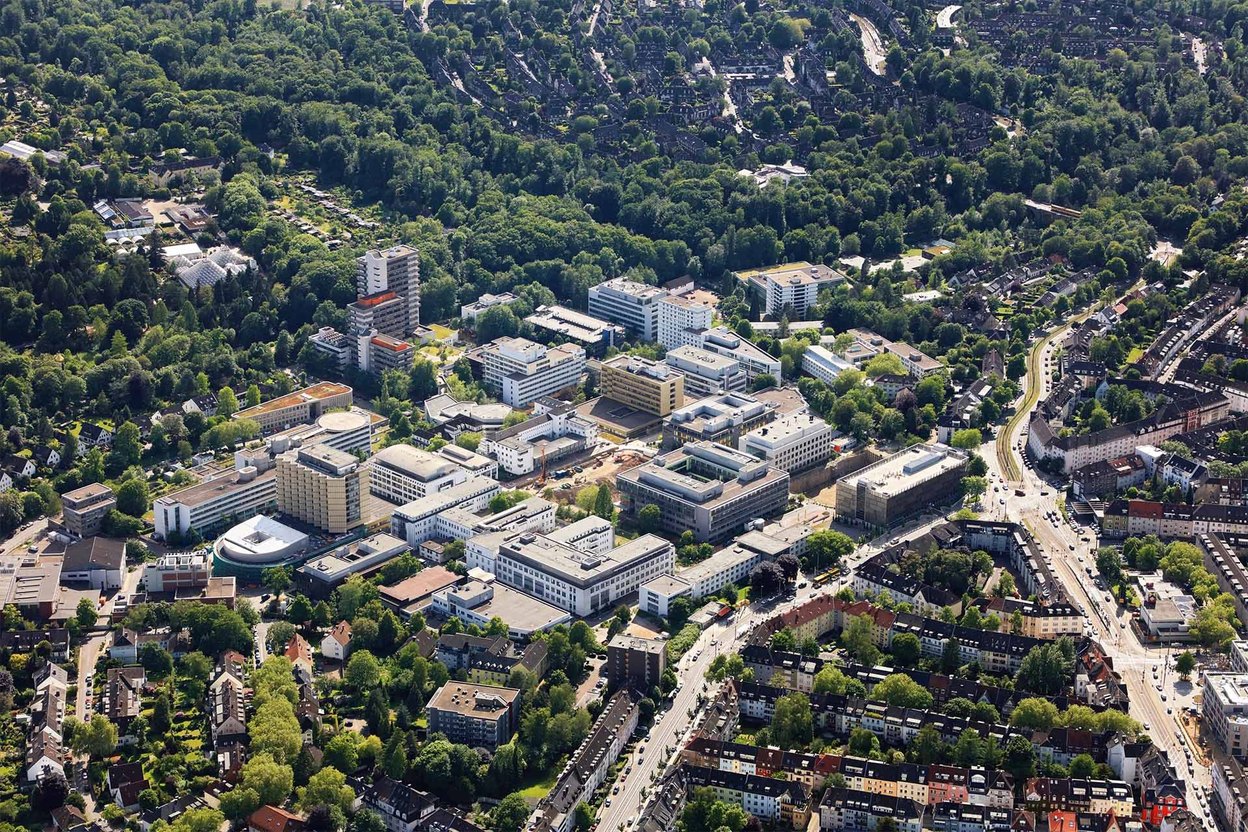
Essen University Hospital (Universitätsklinikum Essen) represents a major public healthcare institution integrated with the University of Duisburg-Essen. Situated in the southern area of the Holsterhausen district in Essen, this comprehensive medical complex incorporates approximately sixty distinct buildings housing twenty-seven specialized clinical departments and twenty-four academic research institutes. More than eight thousand healthcare professionals, including senior clinical specialists, researchers, nursing staff, and administrative personnel, work across the facility. The hospital maintains a total capacity of 1,291 inpatient beds. On an annual basis, the medical center provides specialized inpatient treatment to approximately 55,000 individuals while handling more than 300,000 outpatient consultations. As one of the prominent hospitals in Germany, the medical center combines university-level scientific research with advanced patient care to address complex medical conditions.
Departments and Specialties
- Department of Medical Intensive Care I (Abteilung für Medizinische Intensivtherapie I)
- Clinic for General, Visceral, Vascular and Transplant Surgery (Klinik für Allgemein-, Viszeral-, Gefäß- und Transplantationschirurgie)
- Clinic for Anaesthesiology and Intensive Care (Klinik für Anästhesiologie und Intensivmedizin)
- Clinic for Ophthalmology (Klinik für Augenheilkunde)
- Clinic for Dermatology (Klinik für Dermatologie)
- Clinic for Endocrinology, Diabetology and Metabolism (Klinik für Endokrinologie, Diabetologie und Stoffwechsel)
- Clinic for Gynaecology and Obstetrics (Klinik für Frauenheilkunde und Geburtshilfe)
- Clinic for Gastroenterology, Hepatology and Transplant Medicine (Klinik für Gastroenterologie, Hepatologie und Transplantationsmedizin)
- Clinic for Otorhinolaryngology (Klinik für Hals- Nasen- und Ohrenheilkunde)
- Clinic for Haematology and Stem Cell Transplantation (Klinik für Hämatologie and Stammzelltransplantation)
The complex organizational layout of the university medical center enables it to accommodate patients with intricate, rare, and multi-system medical conditions. The Department of Haematology and Stem Cell Transplantation specializes in managing severe diseases of the blood and bone marrow, where precise diagnostic monitoring, targeted therapies, and intensive post-transplant care are critical. In the surgical departments, experienced clinical teams perform major procedures on internal abdominal organs, complex vascular structures, and soft tissues, alongside abdominal organ transplantation. Patients suffering from acute or chronic hepatic and gastrointestinal disorders consult the gastroenterology and hepatology clinic, where specialized endoscopic evaluations and laboratory diagnostics take place. When individuals require structured care, such as cancer treatment in Germany, interdisciplinary tumor boards bring together surgeons, oncologists, radiologists, and pathologists to coordinate every clinical step.
The cardiology and endocrinology divisions handle systemic metabolic disorders, complex vascular diseases, and severe cardiac pathologies through standardized clinical protocols. When treating structural heart disease or complex vascular conditions, clinicians establish comprehensive management strategies encompassing conservative medical therapy and surgical interventions; more details regarding these cardiac programs are detailed under cardiology in Germany. Specialized departments for ophthalmology, dermatology, and otorhinolaryngology provide targeted interventions that rely on advanced diagnostic imaging and micro-surgical techniques. Additionally, the medical center features specialized pediatric departments and pediatric surgery to cater specifically to young patients. Every clinical unit works closely with university research institutes to integrate current scientific findings into daily patient treatment protocols.
Doctors at the Clinic
Clinical leadership across key university departments is held by highly experienced German medical specialists who balance direct patient care with ongoing academic research and clinical teaching responsibilities at the university. Notable department heads serving at the hospital include Prof. Dr. Stephan Lang and Prof. Dr. Thorsten Brenner. Under their experienced guidance, specialized clinical teams carry out intricate diagnostic examinations, surgical procedures, and intensive care protocols adhering strictly to academic standards. The duties of these chief physicians encompass leading multi-disciplinary medical panels, implementing updated clinical guidelines, overseeing specialized surgical suites, and coordinating emergency care operations throughout their respective clinical divisions.
Location and Getting There
The university hospital complex is situated in Essen, within the southern part of the Holsterhausen district. Essen serves as a major industrial, economic, and cultural hub within the state of North Rhine-Westphalia, featuring an extensive regional transport network. The expansive hospital campus spans numerous city blocks, accommodating approximately sixty specialized buildings. This urban location makes the facility easily accessible for both local residents and international visitors traveling into the region. The nearest major international airports are located in Düsseldorf and Dortmund, both offering straightforward connections to Essen by regional train lines, express buses, or private vehicle transport.
Local urban transport in Essen includes an interconnected grid of underground trains (U-Bahn), trams, and bus lines, enabling convenient travel from the Essen central railway station directly to the campus area. For individuals arriving by private or rented vehicles, dedicated parking areas are located throughout the campus grounds adjacent to major clinical buildings. The specific address of the relevant department, building numbers, and detailed arrival instructions are provided to each patient alongside their official hospital invitation. This structured notification system allows patients and accompanying relatives to plan their journey efficiently and navigate the university campus without unnecessary delay.
Accommodation, Dining, and Facilities
Inpatient stay conditions at German university medical centers are structured to support both physical recovery and psychological well-being during treatment. General inpatient wards offer standard accommodation, while enhanced comfort rooms (Wahlleistung) are available upon request as elective services. Single and double rooms featuring upgraded furnishings, private sanitary facilities, and additional media amenities can be requested prior to admission. Patient dining plans are tailored to meet personal dietary preferences and strict medical requirements, with multi-option menus presented daily to ensure nutritional balance throughout the hospital stay.
The university campus incorporates green spaces and walking paths where patients can spend quiet time outdoors between medical appointments or diagnostic tests. On-site cafeterias and small shops provide hot beverages, light meals, and daily essentials for patients and their visiting family members. Visiting policies allow relatives to remain close to patients during designated visiting hours, providing vital emotional support throughout hospital stays. For individuals who wish to undertake a preliminary preventative assessment before initiating specialized therapy, scheduling a comprehensive full body examination in Germany can help establish an accurate overall health profile.
How to Arrange Treatment
Arranging medical care at a German university hospital begins with collecting and submitting comprehensive medical documentation. Patients must provide detailed medical histories, recent laboratory results, physician letters, and digital diagnostic imaging scans such as MRI or CT scans. University specialists evaluate these clinical records to determine medical urgency, treatment feasibility, and appropriate department placement. Based on this expert medical review, the hospital issues an official preliminary cost estimate, known as a Kostenvoranschlag. This document itemizes anticipated medical procedures, estimated length of stay, and projected financial requirements; complete information regarding budgeting and billing is detailed under cost of treatment and payment in Germany.
Following the deposit payment directly to the hospital’s official financial account, the medical center releases a formal invitation letter required for obtaining a medical visa. AlenMed assists patients throughout every stage of this process, from initial document translation and medical submission to on-site coordination in Germany. Throughout diagnostic assessments and inpatient procedures, patients receive direct assistance from a professional medical interpreter in Germany, ensuring precise communication between the patient and the medical team. Direct settlement with the hospital accounting department guarantees complete financial transparency without unexpected surcharges or third-party markups.
Send Medical Documents
If you or a family member are considering diagnostic evaluation or specialized medical treatment at Essen University Hospital, you can send your complete medical documentation and diagnostic scans through our contact form. The medical advisors at AlenMed will conduct an initial review of your records without fee, assist with organizing certified translations into German, and officially submit your case to the designated university department. Once evaluated by the chief physicians, you will receive an official medical response along with a preliminary cost estimate and clear guidance on the next steps for arranging your medical travel to Germany.
This information is provided for educational purposes only and does not constitute a public offer or professional medical advice. The final treatment plan and actual costs are determined exclusively after expert evaluation of medical documents and the issuance of an official preliminary cost estimate by the hospital.