 EN
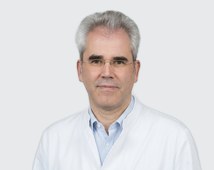
Professor Ulrich Laufs is director of the Department of Cardiology (Klinik und Poliklinik für Kardiologie) at Leipzig University Hospital (Universitätsklinikum Leipzig). Patients see him for coronary artery disease (narrowed heart arteries), heart failure and heart rhythm disorders, and for severe lipid disorders such as very high cholesterol.
What Professor Laufs treats
Professor Laufs is an interventional cardiologist, treating heart disease with a catheter passed along a blood vessel. He is a specialist in internal medicine, cardiology, angiology (vascular medicine) and internal intensive care medicine, sees patients in the department’s lipid clinic and researches the mechanisms of cardiovascular prevention. The department offers:
- coronary angiography (X-ray imaging of the heart arteries) and widening of narrowed or blocked coronary arteries with balloons and stents;
- catheter aortic valve replacement (TAVI) with the cardiac surgeons of Herzzentrum Leipzig and mitral valve repair with a clip (MitraClip);
- catheter ablation for atrial fibrillation and other arrhythmias, using radiofrequency energy or cold;
- pacemakers and defibrillators, including devices that treat heart failure;
- treatment of high cholesterol, triglycerides and lipoprotein(a), including statin intolerance.
See also our page on cardiology in Germany.
Training and experience
Ulrich Laufs studied philosophy and medicine at Ruhr University Bochum and medicine at the University of Hamburg. After working as a junior doctor in cardiology at the University of Cologne, he spent two years as a DFG research fellow at Brigham and Women’s Hospital, Harvard Medical School, in Boston. From 2000 he worked at Saarland University, completing his habilitation in 2004 and becoming professor in 2008 and deputy department director in 2011. Since July 2017 he has been director of cardiology in Leipzig and professor at Leipzig University, and he is an associate editor of the European Heart Journal.
The department and hospital
The department focuses on interventional cardiology, heart failure, heart rhythm disorders and the prevention of cardiovascular disease. Its cardiac catheter laboratory has two catheter suites and a team available around the clock, so acute heart conditions can be treated at any time. The chest pain unit (Brustschmerzambulanz) offers same-day tests to detect or rule out an impending heart attack. For complex problems beyond cardiology, specialists from other departments are involved. More on the University Hospital Leipzig page.
Frequently asked questions
What conditions does Professor Laufs treat?
Professor Laufs treats coronary artery disease, including narrowed heart arteries that can be widened with a catheter, as well as heart failure and heart rhythm disorders. A further focus is severe lipid disorders: very high cholesterol, including familial hypercholesterolaemia, high triglycerides and lipoprotein(a), and intolerance or side effects of statins.
How can I see Professor Laufs from abroad?
Gather your medical letters and earlier results: the department asks for important previous findings and, for the lipid clinic, current and past blood results, a list of all medicines, especially cholesterol-lowering drugs, and your diagnoses. AlenMed translates them into German and forwards your request; the hospital confirms a date and decides which doctor sees you.
How much does treatment with Professor Laufs cost?
The exact amount is set by the hospital in a written estimate (Kostenvoranschlag) prepared before you travel. It depends on the examinations and treatment: a consultation, coronary angiography with stenting and catheter valve replacement are priced differently. Payment goes directly to the hospital.
How to see Professor Laufs through AlenMed
AlenMed translates your medical letters, ECGs and test results into German, agrees a date with the hospital and, if needed, arranges a medical interpreter and personal support. To start, send a request through our form.
This information is for reference only and is not an offer. A doctor decides whether and how to treat after an in-person examination.