 EN
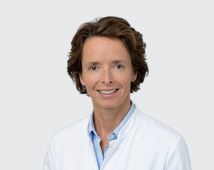
Professor Sabine Aisenbrey is chief physician of the Department of Ophthalmology (Klinik für Augenheilkunde) at Vivantes Klinikum Neukölln in Berlin. Patients see her about retinal and vitreous disease, macular degeneration, cataract and corneal disease. She specialises in the back of the eye and children’s eye disease.
What Professor Aisenbrey treats
Professor Aisenbrey heads an eye department that uses medication, laser and microsurgery. Her research concerns new treatments for retinal and macular disease; the macula is the part of the retina responsible for the sharpest vision. Her department treats:
- cataract (clouding of the lens): the lens is replaced with an artificial one, mostly as day surgery;
- age-related macular degeneration: injections into the eye, with laser only in rare cases;
- vitreous clouding from diabetic bleeding or inflammation (uveitis), retinal tears and detachment: vitrectomy, the removal of the vitreous gel;
- macular holes and epiretinal membranes: minimally invasive vitrectomy;
- corneal clouding and keratoconus: partial corneal transplants (DMEK) and, in early keratoconus, cross-linking with riboflavin and UV light.
Read more on our ophthalmology page.
Training and experience
Sabine Aisenbrey studied medicine and philosophy in Cologne, earning her doctorate there in 2001. After research and teaching at Tufts University School of Medicine in Boston from 2002 to 2004, she became a consultant at the Tübingen university eye hospital, covering eyelid, cataract, glaucoma and corneal surgery, retinal disease and surgery of the back of the eye.
She completed her habilitation, the German qualification for professorship, in 2008 with a thesis on macular degeneration, and in 2010 took charge of Tübingen’s service for children with retinoblastoma, a malignant eye tumour. In 2014, by then a member of the German Retinological Society, the American Academy of Ophthalmology and the European VitreoRetinal Society, she became professor of ophthalmology in Oldenburg and director of the university eye clinic at Pius-Hospital Oldenburg; she later moved to head the Vivantes eye department in Neukölln.
Where Professor Aisenbrey practises
Professor Aisenbrey practises at the Department of Ophthalmology of Vivantes Klinikum Neukölln (Rudower Straße 48, Berlin), part of the Vivantes hospital network. More than 50 staff work there, and emergency eye care is available around the clock. Examinations take place in specialist clinics, by urgency rather than arrival, and the chief physician runs a private clinic. Vivantes performs over 3,000 cataract operations a year.
Frequently asked questions
What conditions does Professor Aisenbrey treat?
Professor Aisenbrey treats retinal and vitreous diseases such as retinal detachment, diabetic bleeding in the eye, age-related macular degeneration and macular holes. Her department also performs cataract surgery and corneal transplants and treats keratoconus. She specialises in the back of the eye and children’s eye disease.
How can I see Professor Aisenbrey from abroad?
First, gather recent reports from your ophthalmologist and test results: the department books patients into specialist clinics based on current findings. AlenMed translates them into German and forwards your request; the hospital confirms a date and decides which doctor examines you and operates.
How much does treatment with Professor Aisenbrey cost?
The exact amount is set by the hospital in a written estimate (Kostenvoranschlag) prepared before you travel. It depends on the examination and treatment: cataract surgery, a course of eye injections and retinal surgery are priced differently. Payment goes directly to the hospital.
How to see Professor Aisenbrey through AlenMed
AlenMed translates your records into German, agrees a date with the hospital and, if needed, arranges a medical interpreter and personal support. To start, send a request through our form.
This information is for reference only and is not an offer. A doctor decides whether and how to treat after an in-person examination.