 EN
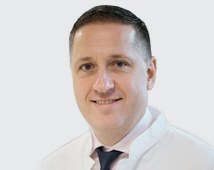
Professor Igor Tsaur is medical director of the University Department of Urology (Universitätsklinik für Urologie) at Tübingen University Hospital. A specialist in robot-assisted surgery, he has performed several thousand robotic operations. Patients see him about tumours of the prostate, bladder, kidney, testis and penis, benign prostate enlargement and kidney stones.
What Professor Tsaur treats
Professor Tsaur is a urologist; in his department, he and two other surgeons perform da Vinci robotic operations for a wide range of conditions. He developed the Retro Nux technique – tissue-sparing robotic kidney and ureter surgery through a retroperitoneal approach – and has performed complex reconstructions such as a urinary reservoir made from bowel (Mainz pouch). Robotic operations include:
- prostate removal for cancer and enucleation of a benign adenoma;
- bladder removal for cancer with a new bladder made from bowel or another urinary diversion;
- partial or complete kidney removal for tumours, including with a clot in the vena cava, and adrenal surgery;
- reconstruction of narrowed ureters and of the renal pelvis;
- lymph node removal for testicular and penile cancer.
For background, see our pages on urology and oncology in Germany.
Training and experience
Professor Tsaur has specialised in robotic surgery since 2015: he started at Frankfurt University Hospital, then was senior consultant (leitender Oberarzt) at the University Medical Centre Mainz and trained in Ghent (Belgium) and New Jersey (USA). From Mainz, where he was an adjunct professor, he was appointed to the W3 professorship of urology in Tübingen.
He chairs the working group on urosurgical techniques of the German Society of Urology (DGU) and is a proctor for Intuitive Surgical, maker of the da Vinci system, training other surgeons, including through live operations in Egypt. He designed the DEPECA-2 study on robotic lymph node removal in penile cancer.
The department and hospital
The department’s core is urological cancer care with a focus on minimally invasive techniques, plus common conditions such as benign prostate enlargement and stones, prosthetics and reconstructive surgery. It has three da Vinci robots and performs more than 430 robotic operations a year, including more than 220 prostate removals and more than 100 kidney operations.
Its uro-oncology centre is certified, with an oncology and second-opinion clinic and a clinical trials unit. Robot-guided prostate biopsy using combined MRI and ultrasound is done at the outpatient surgery centre of its partner, Loretto Klinik in Tübingen. More about the hospital: Tübingen University Hospital.
Frequently asked questions
What conditions does Professor Tsaur treat?
Professor Tsaur mainly treats tumours of the urinary and male genital organs – prostate, bladder, kidney, testicular and penile cancer – especially when robotic surgery is an option. His department also treats benign prostate enlargement, kidney stones, narrowed ureters, andrological problems and sexual dysfunction, and urinary incontinence.
How can I see Professor Tsaur from abroad?
Gather your medical reports, test results and imaging reports; for a targeted prostate biopsy, the department needs your prostate MRI, usually on CD. AlenMed translates the documents into German and forwards your request; the hospital confirms a date and decides which of the department’s doctors sees you and operates.
How much does treatment with Professor Tsaur cost?
The exact amount is set by the hospital in a written estimate (Kostenvoranschlag) prepared before you travel. It depends on the examinations and treatment: robotic prostate removal, kidney surgery and drug treatment for a tumour are priced differently. Payment goes directly to the hospital.
How to see Professor Tsaur through AlenMed
AlenMed translates your records and imaging reports into German, agrees a date with the hospital and, if needed, arranges a medical interpreter and personal support. To start, send a request through our form.
This information is for reference only and is not an offer. A doctor decides whether and how to treat after an in-person examination.