 EN
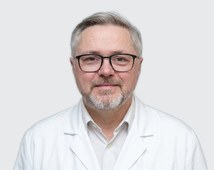
PD Dr Michael Rosenkranz is chief physician of the Department of Neurology and Early Neurological Rehabilitation (Klinik für Neurologie und Neurologische Frührehabilitation) and medical director of Albertinen Krankenhaus in Hamburg. Patients come with stroke, Parkinson’s disease, dementia and nerve and muscle disorders, or for rehabilitation after severe brain damage.
What Dr Rosenkranz treats
Dr Rosenkranz treats diseases of the nervous system: he is a neurologist with an additional qualification in neurological intensive care. His department, with a certified stroke unit, covers all of neurology. Main areas:
- acute stroke: round-the-clock thrombolysis (dissolving the clot) and thrombectomy (catheter removal) with University Medical Center Hamburg-Eppendorf (UKE) specialists;
- Parkinson’s disease: intensive multidisciplinary treatment and assessment for deep brain stimulation with UKE;
- dementia: a short inpatient work-up with MRI, EEG, memory tests and spinal fluid analysis;
- polyneuropathy, myasthenia and other nerve and muscle disorders;
- early rehabilitation (phase B) after the most severe brain damage.
See also our page on neurology.
Training and experience
Dr Rosenkranz studied medicine in Freiburg and Hamburg (1989–1997), with a 1996 spell at St. Vincent’s Hospital and Medical Center in New York, and earned his doctorate in Hamburg in 1999. At the University Medical Center Hamburg-Eppendorf he trained in psychiatry and neuroradiology, qualified in neurology and neurological intensive care in 2005 and was a senior neurologist until 2013, completing his habilitation in 2012. He has headed neurology at Albertinen since July 2013 and been medical director since July 2015.
The department and hospital
The department’s stroke unit was one of the first certified in Hamburg (according to the hospital). Diagnostics include ultrasound of brain arteries and nerves (a DEGUM training laboratory), EEG, EMG and spinal fluid tests, with MRI and CT in the radiology centre. The phase B unit treats patients after strokes, brain haemorrhages, resuscitation-related brain damage and Guillain-Barré syndrome, using a robotic gait trainer. Multiple sclerosis, epilepsy and migraine are also treated. Albertinen Hospital is Hamburg’s largest non-profit hospital and a University of Hamburg teaching hospital (according to the hospital).
Frequently asked questions
What conditions does Dr Rosenkranz treat?
Dr Rosenkranz and his department treat stroke and its prevention, for example in narrowed carotid arteries or atrial fibrillation, as well as Parkinson’s disease, dementia, multiple sclerosis, epilepsy, polyneuropathy and myasthenia. After severe brain damage, patients are admitted for early rehabilitation.
How can I see Dr Rosenkranz from abroad?
Gather your medical reports, neurologists’ letters, MRI or CT reports and a list of medicines. AlenMed translates them into German and forwards your request; the hospital confirms a date. Early rehabilitation usually has more applicants than places; the hospital gets in touch when it can admit. The hospital decides which doctor sees you.
How much does treatment with Dr Rosenkranz cost?
The hospital sets the amount in a written estimate (Kostenvoranschlag) before you travel, so you know the costs in advance. It depends on the examinations and treatment: a dementia work-up, Parkinson’s treatment and early rehabilitation are priced differently. Payment goes directly to the hospital.
How to see Dr Rosenkranz through AlenMed
AlenMed translates your records into German, agrees a date with the hospital and, if needed, arranges a medical interpreter and personal support. To start, send a request through our form.
This information is for reference only and is not an offer. A doctor decides whether and how to treat after an in-person examination.