 EN
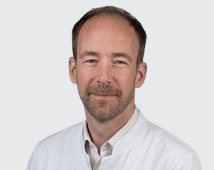
Professor Sebastian Rösch is a senior physician (Oberarzt) in the ENT department of University Hospital Regensburg and medical head of its cochlear implant centre and vestibular (balance) diagnostics. Patients see him about severe hearing loss and deafness when hearing aids no longer help and a cochlear implant, an electronic inner ear prosthesis, is being considered.
What Professor Rösch treats
Professor Rösch is medical head of the centre that follows implant patients from the first examination to lifelong aftercare, and of testing the balance organ in the inner ear. The path to an implant has four steps:
- tests: CT of the temporal bone and MRI of the head to plan surgery; vaccination against pneumococcus and Haemophilus influenzae is recommended;
- advice from an ENT doctor and an audiologist, for children also a paediatric audiologist, to confirm the indication and choose the implant;
- surgery with a four-day stay: the electrode goes into the inner ear through an incision behind the ear, and the implant and hearing nerve are tested in theatre;
- after three to four weeks, the first fitting of the speech processor, then hearing rehabilitation and lifelong follow-up.
For background, see our page on ENT treatment in Germany.
Training and experience
In 2024, as a private lecturer (PD) and senior physician, Sebastian Rösch led the hospital’s participation in a Europe-wide phase II trial of a new drug for sudden hearing loss, given once as an injection into the middle ear. Regensburg was one of three Bavarian centres offering it.
At the department’s conferences he has spoken about cochlear implants in young children and in special situations such as tumours, malformations and tinnitus (2024), and about cochlear implantation and balance function (2025).
The department and hospital
For over 30 years the Cochlea-Implant-Centrum Ostbayern has supported children, adolescents and adults with severe hearing loss or deafness; its implant care is certified by the German ENT Society. Advice, tests and treatment take place in Regensburg, rehabilitation and follow-up at the centre’s Straubing site.
Implants are fitted from babies a few months old to people over 90. Where good low-frequency hearing remains, a hybrid implant is used; deafness in one ear can also be treated with an implant. The centre is part of University Hospital Regensburg.
Frequently asked questions
What conditions does Professor Rösch treat?
Professor Rösch treats severe hearing loss and deafness, whether congenital, gradually worsening, for example after repeated sudden hearing loss, or affecting one ear. An implant is considered when hearing aids no longer give enough speech understanding; an intact hearing nerve is a precondition. His second field is the assessment of the balance organ.
How can I see Professor Rösch from abroad?
Prepare your ENT reports and hearing test results, including pure-tone and speech audiometry with and without hearing aids. The CT and MRI for surgical planning are done by the hospital. AlenMed translates your documents into German and forwards your request; the hospital confirms a date and decides which of the centre’s doctors sees you and operates.
How much does treatment with Professor Rösch cost?
The exact amount is set by the hospital in a written estimate (Kostenvoranschlag) prepared before you travel. It depends on the examinations and treatment: a consultation, implant surgery and the later fittings and rehabilitation are priced differently. Payment goes directly to the hospital.
How to see Professor Rösch through AlenMed
AlenMed translates your records and hearing tests into German, agrees a date with the hospital and, if needed, arranges a medical interpreter and personal support. To start, send a request through our form.
This information is for reference only and is not an offer. A doctor decides whether and how to treat after an in-person examination.