 EN
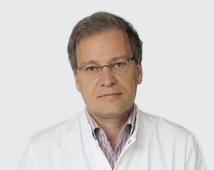
Professor Karl-Ludwig Laugwitz is director of the Department of Internal Medicine I (Klinik und Poliklinik für Innere Medizin I) at TUM Klinikum Rechts der Isar, the university hospital in Munich. His department treats heart disease – heart attack, heart failure, valve disease and rhythm disorders – as well as diseases of the blood vessels and lungs.
What Professor Laugwitz treats
Professor Laugwitz is a cardiologist; his department specialises in cardiology including cardiac intensive care, angiology (vascular disease) and pneumology (lung disease). It offers:
- coronary angiography and stenting, with a heart team on call around the clock for acute heart attack;
- catheter valve treatment: mitral and tricuspid clipping, balloon valvuloplasty and transcatheter aortic valve implantation (TAVI) with the German Heart Centre Munich;
- closure of septal defects, a patent foramen ovale and the left atrial appendage to prevent stroke in atrial fibrillation;
- treatment of slow and fast heart rhythm disorders with catheter ablation using heat, cold or pulsed fields, guided by 3D mapping;
- catheter treatment of narrowed carotid, pelvic and leg arteries, deep vein thrombosis and pulmonary embolism;
- for severe heart failure, defibrillators and resynchronisation therapy, and – with the German Heart Centre – assessment for a ventricular assist device.
For background, see our pages on cardiology and pulmonology in Germany.
Training and experience
Professor Laugwitz studied medicine in Berlin, received his doctorate in 1996 and completed his habilitation at the TUM medical faculty in 2002. At the end of 2002 he moved to the Institute of Molecular Medicine at UC San Diego to work with Professor K. R. Chien, and in early 2005 he was offered a professorship at the CVRC of Massachusetts General Hospital (Harvard Medical School). He has headed the department since 2012. His research covers heart regeneration after injury and clinical trials on stents and antiplatelet drugs; he has more than 450 publications.
The department and hospital
The department is part of TUM Klinikum Rechts der Isar. It has three cardiac catheter laboratories and separate catheter labs for vascular procedures, an 11-bed cardiac intensive care unit with ECMO (machine support for the heart and lungs) and a Chest Pain Unit certified by the German Cardiac Society for patients with sudden chest pain. Its angiology clinic is part of the hospital’s interdisciplinary vascular centre.
Frequently asked questions
What conditions does Professor Laugwitz treat?
Professor Laugwitz and his department treat coronary heart disease and heart attack, valve disease, heart failure and rhythm disorders such as atrial fibrillation. The department also treats vascular disease – narrowed carotid and leg arteries, thrombosis and pulmonary embolism – and lung disease.
How can I see Professor Laugwitz from abroad?
Gather your records and test results, such as ECGs, heart ultrasound and any angiography. Patients who may need catheter valve treatment can register with the structural heart disease clinic with their documents. AlenMed translates them and forwards your request; the hospital confirms a date and decides which doctor sees you.
How much does treatment with Professor Laugwitz cost?
The exact amount is set by the hospital in a written estimate (Kostenvoranschlag) prepared before you travel. It depends on the examinations and treatment: a consultation, angiography with stenting and catheter valve replacement are priced differently. Payment goes directly to the hospital.
How to see Professor Laugwitz through AlenMed
AlenMed translates your records and test results into German, agrees a date for the consultation or procedure with the hospital and, if needed, arranges a medical interpreter and personal support. To start, send a request through our form.
This information is for reference only and is not an offer. A doctor decides whether and how to treat after an in-person examination.