 EN
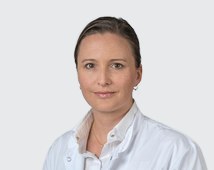
Professor Carina Riediger is chief physician of the Department of General, Visceral and Thoracic Surgery (Klinik für Allgemein-, Viszeral- und Thoraxchirurgie) at Marienhospital Stuttgart in Stuttgart and heads its bowel, lung and pancreas centres. Patients see her mainly about tumours of the digestive organs and lungs, particularly liver tumours.
What Professor Riediger treats
Professor Riediger is a surgeon specialising in complex cancer operations, above all for primary liver cancer and liver metastases. Her work includes robot-assisted surgery and navigated liver surgery: during operations, imaging such as 3D navigation helps her locate tumours precisely. Her department operates on:
- cancer of the oesophagus, stomach, bowel, pancreas and liver, and liver metastases, where needed with heated chemotherapy inside the abdomen (HIPEC);
- tumours of the lungs, thymus and mediastinum, often by keyhole surgery (thoracoscopy);
- the thyroid, parathyroid and adrenal glands;
- hernias, gallstones, Crohn’s disease, ulcerative colitis and proctological conditions.
For background, see our pages on oncology and gastroenterology in Germany.
Training and experience
Professor Riediger studied medicine in Heidelberg and Paris and trained as a surgeon at the Technical Universities of Munich and Dresden. At Dresden University Hospital she was senior consultant (Leitende Oberärztin) and permanent deputy to the department director, and set up a research group on navigated liver surgery. She has headed the department in Stuttgart since 1 July 2025.
She is a specialist (Facharzt) in general and visceral surgery with additional qualifications in special visceral surgery and transplant medicine, deputy chair of the liver, bile duct and pancreas working group (CALGP) of the German Society for General and Visceral Surgery, and a member of the International Laparoscopic Liver Society (ILLS).
The department and hospital
The department operates on the abdomen and chest. Most operations are minimally invasive, many are done as day cases, and a da Vinci surgical robot is available. For cancer, the surgeons work closely with other specialists in the hospital.
In the lung centre, tumours are treated by a team of pulmonologists, thoracic surgeons, oncologists, radiologists, nuclear medicine specialists and radiotherapists. The bowel and pancreas centres and the hospital’s cancer centre are certified by the German Cancer Society (DKG). More about the hospital: Marienhospital Stuttgart.
Frequently asked questions
What conditions does Professor Riediger treat?
Professor Riediger mainly treats liver tumours – primary liver cancer and metastases – as well as cancer of the oesophagus, stomach, bowel and pancreas. Her department also operates on lung and mediastinal tumours, the thyroid and adrenal glands, hernias, gallstones and inflammatory bowel disease.
How can I see Professor Riediger from abroad?
Gather your documents: the department asks for doctors’ letters, imaging reports with the images on CD or QR code, operation reports and a list of your medicines. AlenMed translates them into German and forwards your request; the hospital confirms a date. If surgery is needed, preparation starts right after the consultation. The hospital decides which doctor sees you and operates.
How much does treatment with Professor Riediger cost?
The exact amount is set by the hospital in a written estimate (Kostenvoranschlag) prepared before you travel, so you know the costs in advance. It depends on the examinations and the operation: a day-case hernia repair, a robot-assisted operation and major liver surgery are priced differently. Payment goes directly to the hospital.
How to see Professor Riediger through AlenMed
AlenMed translates your records and imaging reports into German, agrees a date with the hospital and, if needed, arranges a medical interpreter and personal support. To start, send a request through our form.
This information is for reference only and is not an offer. A doctor decides whether and how to treat after an in-person examination.