 EN
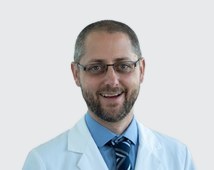
Dr Martin Sidler is head of the Paediatric Surgery Section (Sektion Kinderchirurgie) in the Department of General and Visceral Surgery at Ulm University Hospital (Universitätsklinikum Ulm). He specialises in minimally invasive surgery on newborns and children. Families see him about oesophageal or duodenal atresia, lung malformations, reflux, hernias and diseases of the pancreas.
What Dr Sidler treats
Dr Sidler is a paediatric surgeon specialising in keyhole (minimally invasive) surgery, using small incisions and a camera instead of a large cut. His clinical focus areas are:
- surgery on newborns with oesophageal or duodenal atresia, where the organ is blocked from birth;
- minimally invasive chest surgery, such as removing a lung lobe for lung malformations or removing duplication cysts (congenital cystic duplications);
- laparoscopic anti-reflux surgery for stomach contents flowing back into the oesophagus;
- pancreatic surgery;
- laparoscopic hernia repair.
His research looks at how the bladder adapts to an obstructed urine outflow, and at minimally invasive surgery in newborns. For background, see our page on children’s medicine in Germany.
Training and experience
Dr Sidler passed his state medical examination at the University of Zurich in 2003 and obtained the US ECFMG – USMLE certificate for international medical graduates in 2009. In 2014 he completed a fellowship in neonatal and paediatric surgery at the Children’s Hospital of Philadelphia, and in 2016 a fellowship in paediatric urology at the Hospital for Sick Children in Toronto.
In 2017 he qualified as a specialist in paediatric surgery in Switzerland and earned a Master of Science at the University of Toronto; in 2022 he gained the Baden-Württemberg certificate in medical didactics. He also holds trauma and life support provider certificates for adults and children (ATLS, ACLS, PALS).
The department and hospital
Paediatric surgery at Ulm University Hospital was established in 2007 as a section of the Department of General and Visceral Surgery. It has grown steadily and now cares for young patients from Lake Constance across the Swabian Alb to northern Württemberg. Its senior surgeons are specialists in paediatric surgery, including paediatric urology and child protection medicine.
The section runs clinics for general paediatric surgery, oesophageal disease, chest surgery, burns, abdominal surgery and colorectal surgery. Conditions treated include pyloric stenosis, intestinal and anal atresia, appendicitis, undescended testes, inguinal and umbilical hernias, lung malformations and chest wall deformities, burns and scars, and Hirschsprung’s disease. The section is part of Ulm University Hospital.
Frequently asked questions
What conditions does Dr Sidler treat?
Dr Sidler treats surgical conditions in newborns and children, especially where minimally invasive surgery is possible: oesophageal or duodenal atresia, lung malformations, duplication cysts, reflux, hernias and pancreatic disease. His section also treats appendicitis, undescended testes, burns, Hirschsprung’s disease and other conditions that need a paediatric surgeon.
How can I see Dr Sidler from abroad?
Start by gathering your child’s discharge letters, doctors’ reports and test results. AlenMed translates the documents into German and forwards your request; the hospital confirms a date. The section also offers video consultations to discuss findings or give a second opinion. The hospital decides which of the section’s surgeons sees and operates on your child.
How much does treatment with Dr Sidler cost?
The hospital sets the amount in a written estimate (Kostenvoranschlag) prepared before you travel, so you know the costs in advance. It depends on the examinations and the treatment your child needs: a consultation, a planned laparoscopic operation and complex newborn surgery are priced differently. Payment goes directly to the hospital.
How to see Dr Sidler through AlenMed
AlenMed translates your child’s records and test results into German, agrees a date with the hospital and, if needed, arranges a medical interpreter and personal support. To start, send a request through our form.
This information is for reference only and is not an offer. A doctor decides whether and how to treat after an in-person examination.