 EN
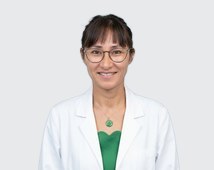
Professor Diana Le Duc is director of the Institute of Clinical Genetics (Institut für Klinische Genetik) at Universitätsklinikum Carl Gustav Carus Dresden. Families come to her about inherited diseases, unexplained developmental disorders in children and a suspected hereditary risk of cancer.
What Professor Le Duc treats
Professor Le Duc is a specialist in human genetics (Fachärztin für Humangenetik). Her research group studies how neurodevelopmental disorders and overgrowth and tumour predisposition syndromes arise and links new genes to them. The institute focuses on:
- intellectual developmental disorders: finding the cause, advice on supporting the child and contact with self-help groups;
- rare syndromes of unclear cause; its doctors sometimes describe a new syndrome for the first time;
- familial tumours: 10% of tumours stem from an inherited predisposition; once the mutation is known, healthy relatives can be tested.
See also children’s medicine and oncology.
Training and experience
Diana Le Duc studied medicine in Bucharest (2004–2010) and earned a doctorate in natural sciences (Dr. rer. nat.) at the Max Planck Institute for Evolutionary Anthropology in Leipzig in 2015. At the Institute of Human Genetics in Leipzig she qualified as a specialist in 2022 and completed her habilitation in 2023. After co-heading clinical human genetics at Chemnitz Hospital’s diagnostics centre from 2023, she has headed the Dresden institute since 2025 and sits on the directorate of the National Center for Tumor Diseases (NCT) Dresden.
The department and hospital
The institute counsels patients and families and performs genetic analyses in an accredited laboratory; it is Dresden’s centre in the German consortia for familial breast, ovarian and colorectal cancer. Counselling takes up to two hours: the doctor records the family’s medical history back to the grandparents, draws a family tree and, if needed, arranges tests such as a chromosome analysis from a blood sample. Each case is discussed at a weekly conference, and counselling ends with a written report. The institute is part of University Hospital Dresden.
Frequently asked questions
What conditions does Professor Le Duc treat?
Professor Le Duc’s institute sees patients with developmental delay and intellectual disability, malformations, suspected genetic syndromes, inherited muscle and metabolic diseases, neurodegenerative diseases and families with frequent cancers. Counselling also helps with infertility, recurrent miscarriage and pregnancy when inherited diseases run in the family.
How can I see Professor Le Duc from abroad?
The institute reviews requests once a week and then contacts the patient. Send existing reports with your request and bring imaging on CD, your family’s medical history and, in pregnancy, the maternity record. AlenMed translates the documents and forwards your request; the hospital decides which doctor sees you.
How much does treatment with Professor Le Duc cost?
The exact amount is set by the hospital in a written estimate (Kostenvoranschlag) prepared before you travel. It depends on what is needed: a single consultation, a chromosome analysis or more complex molecular genetic tests are priced differently. Payment goes directly to the hospital.
How to see Professor Le Duc through AlenMed
AlenMed translates your records into German, agrees a consultation date with the hospital and, if needed, arranges a medical interpreter and personal support. To start, send a request through our form.
This information is for reference only and is not an offer. A doctor decides whether and how to treat after an in-person examination.