 EN
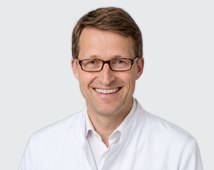
Dr Flemming Beisse is deputy head of the Section of Strabismus and Neuro-ophthalmology (Sektion Schielbehandlung und Neuroophthalmologie) and a senior physician at Heidelberg University Eye Hospital (Universitäts-Augenklinik Heidelberg). Patients see him about squint in children and adults, eye movement disorders and nystagmus, and optic nerve and eye socket diseases. He operates on eye muscles and eyelids himself.
What Dr Beisse treats
Dr Beisse is an ophthalmologist with the European FEBO diploma and one of the section’s three senior physicians who perform its operations. The section links ophthalmology with neurology and paediatrics. Its work covers:
- squint and amblyopia (“lazy eye”), and glasses for children;
- congenital and childhood eye diseases, including childhood cataract, and retinopathy of prematurity;
- nystagmus (involuntary eye movements), eye movement and pupil disorders;
- optic nerve diseases such as optic neuritis, thyroid eye disease and tumours of the eye socket;
- eye muscle surgery, including repeat operations, eyelid surgery for drooping or incomplete closure, and removal of orbital tumours.
For background, see our pages on ophthalmology and children’s medicine in Germany.
Training and experience
Dr Beisse studied medicine in Berlin, Tübingen, Freiburg and London from 1991 to 1998 and completed his doctoral thesis in 1998. He trained as an ophthalmologist at Freiburg University Eye Hospital (1999–2004) and, until 2012, was a senior physician in its section for neuro-ophthalmology, paediatric ophthalmology and strabismus.
Since 2012 he has been a senior physician and deputy head of the section in Heidelberg. He became a Fellow of the European Board of Ophthalmologists (FEBO) in 2011 and gained an additional qualification in medical quality management from the Baden-Württemberg Chamber of Physicians in 2006.
The department and hospital
In the section, doctors work with orthoptists, specialists in how the two eyes work together, and the section runs a school of orthoptics. An orthoptist or junior doctor examines the patient first, then the senior physician. Operations are done as day cases or with one night in hospital, depending on the condition and method.
The eye hospital is part of the Head Clinic (Kopfklinik) of Heidelberg University Hospital, runs 20 specialist clinics, including for cataract, glaucoma, retina and cornea, and works with neurologists and paediatricians. More about the hospital: Heidelberg University Eye Hospital.
Frequently asked questions
What conditions does Dr Beisse treat?
Dr Beisse treats squint in children and adults, amblyopia, nystagmus and other eye movement disorders, optic nerve diseases, thyroid eye disease, tumours of the eye socket and drooping eyelids. If eye muscle or eyelid surgery is needed, it may be performed by him or by one of the section’s two other senior physicians.
How can I see Dr Beisse from abroad?
Appointments are usually arranged through a referring ophthalmologist using the hospital’s form, so start with your eye doctor’s report and test results. AlenMed translates them into German and forwards your request; the hospital confirms a date. Bring your glasses and allow several hours, as eye drops to widen the pupils may be used. The hospital decides which doctor sees you.
How much does treatment with Dr Beisse cost?
The exact amount is set by the hospital in a written estimate (Kostenvoranschlag) prepared before you travel, so you know the costs in advance. It depends on the examinations and treatment: a consultation with a glasses prescription, day-case eye muscle surgery and an operation with an overnight stay are priced differently. Payment goes directly to the hospital.
How to see Dr Beisse through AlenMed
AlenMed translates your eye doctor’s reports and test results into German, agrees a date with the hospital and, if needed, arranges a medical interpreter and personal support. To start, send a request through our form.
This information is for reference only and is not an offer. A doctor decides whether and how to treat after an in-person examination.