 EN
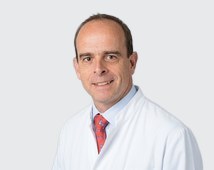
Professor Thomas Dietlein heads the glaucoma unit and is deputy director and senior consultant (Leitender Oberarzt) at the Centre for Ophthalmology (Zentrum für Augenheilkunde) of Cologne University Hospital (Uniklinik Köln). Patients see him about glaucoma, an optic nerve disease usually linked to raised eye pressure, including in children.
What Professor Dietlein treats
Professor Dietlein is an ophthalmologist (Facharzt für Augenheilkunde) focusing on glaucoma, cataract, eyelids and children’s eye surgery. Glaucoma is treacherous: raised pressure and early gaps in vision usually go unnoticed, and untreated it can cause blindness. For glaucoma, the centre offers:
- examination of the back of the eye, visual field tests and daytime pressure curves;
- night-time pressure checks during a two- to three-day hospital stay, as pressure usually peaks in the evening and at night;
- eye drops and, for a limited time, tablets;
- laser and surgical operations;
- care for congenital and childhood glaucoma and cataract, where Professor Dietlein is one of the specialists.
His research covers trabecular surgery on the eye’s drainage tissue, glaucoma implants, congenital glaucoma (the PIRATE study) and quality of life. Read more on our ophthalmology page.
Training and experience
Thomas Dietlein studied medicine in Münster, Freiburg and Mainz (1987–1993), worked briefly in Fribourg, Switzerland, and has been at the Cologne Centre for Ophthalmology since February 1994, as a specialist since 1998. He completed his habilitation, the German qualification for professorship, in 2001, became adjunct professor in 2006 and was acting head of the Düsseldorf university eye clinic in 2010.
He has more than 200 peer-reviewed publications, sits on the DOC congress programme committee, lectures for the Augenärztliche Akademie and co-wrote the glaucoma section of the textbook Facharztprüfung Augenheilkunde (Thieme, 2025).
The department and hospital
The centre treats all kinds of eye disease with medication and surgery. Its outpatient clinic covers glaucoma, cataract, corneal, eyelid, orbital and tear duct disease, dry eye, retinal disease and uveitis, and there are four inpatient wards.
At the paediatric eye surgery centre, ophthalmologists, anaesthetists and paediatricians work together: young children can be examined under anaesthesia with imaging (OCT) built into the operating microscope and operated on straight away, sparing a second anaesthetic. The Eye Center at Cologne University Hospital is part of Uniklinik Köln.
Frequently asked questions
What conditions does Professor Dietlein treat?
Professor Dietlein treats glaucoma, with raised or almost normal eye pressure, as well as congenital and childhood glaucoma and cataract. Glaucoma is more likely with an affected close relative, short-sightedness or marked long-sightedness, long-term cortisone treatment, uveitis, previous retinal surgery and eye injuries.
How can I see Professor Dietlein from abroad?
Prepare all previous eye reports and a current list of your medicines, including eye drops, so nothing is changed by mistake. AlenMed translates them and forwards your request; the hospital confirms a date and decides who is in charge. Night-time pressure checks take two to three days.
How much does treatment with Professor Dietlein cost?
The hospital sets the exact amount in a written estimate (Kostenvoranschlag) before you travel. It depends on the examination and treatment: a consultation, an inpatient pressure profile and laser or surgical treatment are priced differently. Payment goes directly to the hospital.
How to see Professor Dietlein through AlenMed
AlenMed translates your ophthalmologist’s reports into German, agrees a date with the hospital and, if needed, arranges a medical interpreter and personal support. To start, send a request through our form.
This information is for reference only and is not an offer. A doctor decides whether and how to treat after an in-person examination.