 EN
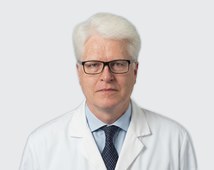
Professor Volker Heinemann, an internist, haematologist and oncologist, directs the LMU cancer centre (CCC MünchenLMU) at LMU Klinikum in Munich. Patients see him mainly about cancers of the pancreas, stomach, bowel, bile ducts and breast.
What Professor Heinemann treats
Professor Heinemann treats solid tumours (cancers of organs rather than blood), mainly digestive ones. His clinical work covers:
- pancreatic cancer, at the University of Munich’s pancreas centre, founded in 1998;
- stomach and bowel tumours, at the Großhadern bowel centre (Darmzentrum);
- breast cancer, at the breast centre (Brustzentrum).
His patients are regularly discussed at tumour boards with surgeons, radiologists and radiotherapists; besides surgery, metastases can be treated with radiofrequency ablation (RFA) or selective internal radiotherapy (SIRT). Over more than 20 years his group has led many trials in digestive cancers whose results have entered national and international guidelines. See our pages on oncology and gastroenterology.
Training and experience
In 1996 he qualified as a specialist in internal medicine and completed his habilitation (the German professorial qualification) at LMU Munich; he became a specialist in haematology and oncology in 1997 and passed the European Society for Medical Oncology (ESMO) examination in 2005. He became director of the LMU cancer centre in March 2010 and was deputy director of the Department of Oncology and Haematology in 2018–2022.
He now heads the department’s oncology group and edits GI oncology for the European Journal of Cancer. In September 2024 he was elected president of the Bavarian Cancer Society (Bayerische Krebsgesellschaft e.V.).
The department and hospital
The LMU cancer centre unites the LMU Klinikum departments that treat cancer. Founded in 2010, it was first certified as an oncology centre by the German Cancer Society (DKG) in December 2013; its certified centres include bowel, pancreatic, stomach, oesophageal and liver cancer centres and a breast centre.
The Department of Oncology and Haematology, where he works, treats cancer and blood diseases on two campuses; for digestive cancers it provides chemotherapy, immunotherapy and targeted therapy, often within trials. More on the Comprehensive Cancer Center Munich LMU.
Frequently asked questions
What conditions does Professor Heinemann treat?
Professor Heinemann treats solid tumours, mainly digestive cancers of the pancreas, stomach, colon, rectum and bile ducts, as well as breast cancer. His oncology group also works with rare tumours, such as neuroendocrine tumours, and cancers whose primary site is unknown (CUP).
How can I see Professor Heinemann from abroad?
Gather your reports and test results: the department asks for all relevant findings, preferably as PDF files. AlenMed translates the documents into German and forwards your request; the hospital confirms a date and decides which of its doctors will see and treat you.
How much does treatment with Professor Heinemann cost?
The exact amount is set by the hospital in a written estimate (Kostenvoranschlag) prepared before you travel. It depends on the examinations and treatment: a consultation and a course of drug therapy are priced differently. Payment goes directly to the hospital.
How to see Professor Heinemann through AlenMed
AlenMed translates your reports into German, agrees a date with the hospital and, if needed, arranges a medical interpreter and personal support. To start, send a request through our form.
This information is for reference only and is not an offer. A doctor decides whether and how to treat after an in-person examination.