 EN
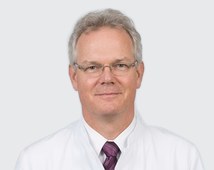
Professor Matthias Gorenflo is director of the Department of Paediatric Cardiology and Congenital Heart Disease (Klinik für Kinderkardiologie und Angeborene Herzfehler) and managing director of the Centre for Child and Adolescent Medicine at Heidelberg University Hospital. Families bring children with congenital or acquired heart disease to him; his own areas are pulmonary hypertension (high blood pressure in the lung vessels) and catheter treatment of heart defects.
What Professor Gorenflo treats
Professor Gorenflo is a paediatric cardiologist; his department treats all forms of congenital and acquired heart and circulatory disease in newborns, children and adolescents. He personally leads the pulmonary hypertension clinic and the clinic for adults with congenital heart disease (EMAH). The department offers:
- catheter treatment: a thin tube is passed to the heart through a vessel in the groin and narrowings are widened with a balloon or stent, from premature babies to adults;
- diagnosis of heart defects before birth, together with the university women’s hospital;
- paediatric cardiac intensive care;
- clinics for Marfan syndrome and inherited rhythm disorders, and follow-up after heart transplantation or with an artificial heart;
- care of adults with congenital heart disease together with cardiologists and heart surgeons.
For background, see our pages on children’s medicine and cardiology in Germany.
Training and experience
Professor Gorenflo received his doctorate in Freiburg in 1985 and worked at the Free University of Berlin’s children’s hospital and the Institute of Child Health in London before joining paediatric cardiology in Heidelberg in 1995; he was senior consultant there from 2003 to 2008 and then a consultant at UZ Leuven, Belgium. After his habilitation on pulmonary hypertension in children (2002), he became professor of paediatric cardiology and head of the department in 2010. He is a specialist in paediatrics with qualifications in paediatric cardiology, paediatric intensive care and neonatology.
The department and hospital
The department belongs to the Centre for Child and Adolescent Medicine with its five departments, from general paediatrics and neonatology to paediatric oncology and neurology. It has a modern cardiac catheter laboratory; the paediatric cardiac surgery section performs all types of operations for congenital heart defects. Special techniques include ECMO (temporary heart-lung support by machine), artificial hearts and heart transplantation in children. The Centre for Child and Adolescent Medicine Heidelberg is part of Heidelberg University Hospital.
Frequently asked questions
What conditions does Professor Gorenflo treat?
Professor Gorenflo treats congenital heart defects in children, from newborns to adolescents, and acquired heart and circulatory disease, with a personal focus on pulmonary hypertension and catheter treatment. His department also cares for adults with congenital heart disease and children with Marfan syndrome, inherited rhythm disorders or a heart transplant.
How can I see Professor Gorenflo from abroad?
Gather your child’s records and test results, such as heart ultrasound reports. AlenMed translates them into German and forwards your request; the hospital confirms a date. The hospital decides which of its doctors carries out the consultation or catheter procedure.
How much does treatment with Professor Gorenflo cost?
The exact amount is set by the hospital in a written estimate (Kostenvoranschlag) prepared before you travel. It depends on the examinations and treatment: a consultation, a catheter procedure and an operation with intensive care are priced differently. Payment goes directly to the hospital.
How to see Professor Gorenflo through AlenMed
AlenMed translates your records into German, agrees a date for the consultation or admission with the hospital and, if needed, arranges a medical interpreter and personal support. To start, send a request through our form.
This information is for reference only and is not an offer. A doctor decides whether and how to treat after an in-person examination.