 EN
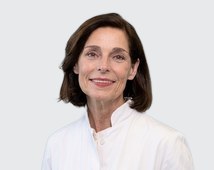
Professor Martina Müller-Schilling is director of the Department of Internal Medicine I (Klinik und Poliklinik für Innere Medizin I) at University Hospital Regensburg. Her department covers gastroenterology and liver disease, intensive care, endocrinology, rheumatology, immunology and infectious diseases. Patients see her about digestive cancers, liver disease and chronic inflammatory bowel disease.
What Professor Müller-Schilling treats
Professor Müller-Schilling is a gastroenterologist: a specialist in internal medicine and gastroenterology with additional qualifications in intensive care, infectious diseases and transplant medicine, and a diabetologist certified by the German Diabetes Society (DDG). She works in the teams of several areas of her department:
- cancers of the digestive tract, pancreas and liver and neuroendocrine tumours, including second opinions and chemotherapy in tablet form;
- diseases of the liver, bile ducts and pancreas, from viral, fatty and autoimmune liver disease to cirrhosis;
- preparation for liver transplantation, most often needed for cirrhosis and liver cancer;
- Crohn’s disease and ulcerative colitis;
- endoscopy: gastroscopy, colonoscopy, bile duct imaging (ERCP) and endoscopic ultrasound.
See our pages on gastroenterology and oncology in Germany.
Training and experience
Martina Müller-Schilling studied medicine and completed her habilitation (Germany’s highest academic qualification) at Heidelberg University, then took a Medical Education Program at Harvard Medical School and a Master of Health Business Administration (MHBA) at the University of Erlangen-Nuremberg. Since 2012 she has held a chair at the University of Regensburg and directed Internal Medicine I.
Her research covers translational cancer research, the p53 gene family in digestive diseases and artificial intelligence in endoscopy and intensive care; her group currently studies the gut barrier and the mechanisms of inflammation and cancer. In 2019 and 2020 she set up the interprofessional training wards A-STAR and I’m A-STAR. She sits on the advisory board of the German Society of Gastroenterology (DGVS) and chairs the National Societies Forum of United European Gastroenterology, a network of 50 national societies.
The department and hospital
In the gastro-oncology clinic, treatment is planned at the conferences of the certified visceral oncology centre and the interdisciplinary tumour board, while a molecular tumour board looks for options based on the tumour’s features. Its study centre can enrol patients in trials of new drugs.
For Crohn’s disease and ulcerative colitis all currently available drugs are used, including biologics. Every colonoscopy uses artificial intelligence to help detect polyps, and emergency endoscopy is available around the clock. The department is part of University Hospital Regensburg.
Frequently asked questions
What conditions does Professor Müller-Schilling treat?
Professor Müller-Schilling and her department treat cancers of the stomach, bowel, pancreas and liver, neuroendocrine tumours, diseases of the liver and bile ducts including cirrhosis, and Crohn’s disease and ulcerative colitis. The department also treats diabetes and other endocrine, rheumatic and infectious diseases.
How can I see Professor Müller-Schilling from abroad?
For a second opinion on a tumour, the hospital asks for all doctors’ letters about the illness, imaging on a CD with written reports and the follow-up record (Nachsorgepass) if you have one. AlenMed translates the documents into German and forwards your request; the hospital confirms a date and decides which of its doctors sees you.
How much does treatment with Professor Müller-Schilling cost?
The exact amount is set by the hospital in a written estimate (Kostenvoranschlag) prepared before you travel. It depends on the examinations and treatment: a second opinion, an endoscopy and a course of cancer treatment are priced differently. Payment goes directly to the hospital.
How to see Professor Müller-Schilling through AlenMed
AlenMed translates your records into German, agrees a date with the hospital and, if needed, arranges a medical interpreter and personal support. To start, send a request through our form.
This information is for reference only and is not an offer. A doctor decides whether and how to treat after an in-person examination.