 EN
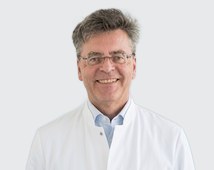
Professor Markus Weigand is medical director of the Department of Anaesthesiology (Klinik für Anästhesiologie) at Heidelberg University Hospital and deputy chief medical director of the hospital. His department provides anaesthesia across the university hospital, runs intensive care units and treats chronic pain.
What Professor Weigand treats
Professor Weigand is an anaesthesiologist and intensive care specialist. His department anaesthetises patients for all operations, procedures and examinations at the hospital, more than 42,000 a year at 57 workstations by its own figures, and monitors breathing, circulation and organ function. Methods include:
- general anaesthesia: inhalational, balanced or total intravenous;
- regional anaesthesia: nerve and plexus blocks, spinal and epidural;
- combinations of the two;
- one-lung ventilation in lung, heart, oesophageal and spinal surgery, and fibreoptic intubation when intubation is difficult.
His research focuses on sepsis, the body’s life-threatening response to infection; his habilitation examined immune changes in it. See our pain treatment page.
Training and experience
Markus Weigand studied medicine in Ulm and Munich and from 1995 worked in anaesthesiology at Heidelberg University. In 2002 he became a specialist in anaesthesiology and received the European Diploma in Anaesthesiology and Intensive Care (DEAA); he also holds additional qualifications in emergency and intensive care medicine. He completed his habilitation in 2004 and became an adjunct professor in 2008.
He headed anaesthesiology in Giessen from 2008 to 2014 and has led the Heidelberg department since October 2014. In the German Sepsis Society (Deutsche Sepsis-Gesellschaft) he was secretary from 2009 to 2017 and chairman from 2017; he is now its general secretary.
The department and hospital
The department works across Heidelberg University Hospital, including the head clinic (Kopfklinik) and the women’s and children’s hospitals. Its intensive care units range from post-operative monitoring to critically ill patients needing ventilation or kidney and lung replacement, and it runs a university centre for acute respiratory distress syndrome (ARDS).
Its pain centre treats adults, and children by arrangement, as outpatients for cancer, back, head, facial and phantom pain, combining medication, physiotherapy, nerve blocks, neurostimulation and psychological support.
Frequently asked questions
What conditions does Professor Weigand treat?
Professor Weigand does not run a clinic for particular diseases: his department provides anaesthesia and intensive care for operations at Heidelberg University Hospital. It also treats critically ill patients, for example with acute lung failure, and chronic pain.
How can I see Professor Weigand from abroad?
Patients usually come to Heidelberg for an operation in another department and meet an anaesthetist beforehand. AlenMed translates your reports and medication list into German and forwards your request; the hospital confirms a date and assigns the anaesthetist. The pain centre asks for a questionnaire and copies of earlier reports.
How much does treatment with Professor Weigand cost?
The exact amount is set by the hospital in a written estimate (Kostenvoranschlag) prepared before you travel. It depends on the operation requiring anaesthesia, any intensive care stay or the pain treatment programme. Payment goes directly to the hospital.
How to see Professor Weigand through AlenMed
AlenMed translates your records into German, agrees a date with the hospital and, if needed, arranges a medical interpreter and personal support. To start, send a request through our form.
This information is for reference only and is not an offer. A doctor decides whether and how to treat after an in-person examination.