 EN
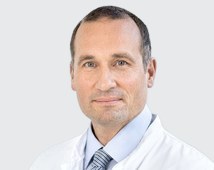
Dr Stefan Kroppenstedt, a neurosurgeon and Privatdozent (PD), is chief physician of the Department of Spine Surgery (Klinik für Wirbelsäulenchirurgie) at Sana Kliniken Sommerfeld in Sommerfeld (Kremmen, Brandenburg). Patients see him when back or neck pain is caused by a slipped disc, a narrowed spinal canal, a fracture or an unstable spine and conservative treatment has not helped.
What Dr Kroppenstedt treats
Dr Kroppenstedt operates on the cervical, thoracic and lumbar spine; his hospital profile lists these procedures:
- microsurgery for slipped discs and spinal stenosis;
- artificial disc replacement in the neck and lower back;
- vertebroplasty and kyphoplasty (bone cement injected into a fractured vertebra);
- open, minimally invasive or percutaneous stabilisation of the spine, including dynamic stabilisation of the lower back;
- stabilisation of the junction between head and neck, for example in rheumatoid arthritis, and correction of degenerative deformities;
- surgery for tumours and other lesions in and around the spinal cord.
For background, see our pages on the spine and neurosurgery in Germany.
Training and experience
Dr Kroppenstedt studied medicine at Johannes Gutenberg University Mainz (1988–1995) and then worked in the neurosurgery department of Berlin’s Charité (Campus Virchow): as a resident from 1995 to 2002 and as a consultant from 2004 to 2011, leading its spine surgery working group from 2007 to 2011. He earned his doctorate in 1997 and his habilitation, the German qualification for university teaching, in 2004.
In 2011 he became head of spine surgery within Sommerfeld’s Department of Operative Orthopaedics and in 2016 chief physician of the Department of Spine Surgery. Since 2011 he has also worked part-time in a neurosurgery practice at the Sana health centre “Schlossgarten” in Neuruppin. He holds the spinal neurosurgery certificate of the German Society of Neurosurgery and the master certificate of the German Spine Society, and teaches at the Charité.
The department and hospital
The department specialises in surgery for back pain and spinal disease: established minimally invasive techniques for slipped discs, spinal stenosis and vertebral fractures, and reconstructive surgery for deformities, including complex cases. Its team of neurosurgeons and orthopaedic surgeons also treats slipped vertebrae and rheumatic, inflammatory and tumorous spinal disease, with methods such as motion-preserving operations, revision surgery and spinal cord stimulation.
After surgery, treatment can continue on site at the hospital’s rehabilitation clinic. The Sana hospital in Sommerfeld is an orthopaedic centre of the Sana Kliniken AG group.
Frequently asked questions
What conditions does Dr Kroppenstedt treat?
Dr Kroppenstedt treats slipped discs, spinal stenosis, slipped or unstable vertebrae, fractures and deformities of the spine, as well as spinal tumours and inflammation. According to the hospital, surgery is indicated when nerve function is impaired, for example by leg weakness, and conservative treatment does not help.
How can I see Dr Kroppenstedt from abroad?
Start with your records: for a surgical consultation the hospital requires an MRI scan no older than six months. AlenMed translates the reports and medical letters into German and forwards your request; the hospital confirms a date and decides which of its doctors sees you and operates.
How much does treatment with Dr Kroppenstedt cost?
The hospital sets the exact amount in a written estimate (Kostenvoranschlag) before you travel, so you know the costs in advance. It depends on the examinations and the operation: microsurgery for a slipped disc, kyphoplasty and stabilisation of several vertebrae are priced differently. Payment goes directly to the hospital.
How to see Dr Kroppenstedt through AlenMed
AlenMed translates your records and MRI reports into German, agrees a date with the hospital and, if needed, arranges a medical interpreter and personal support. To start, send a request through our form.
This information is for reference only and is not an offer. A doctor decides whether and how to treat after an in-person examination.