 EN
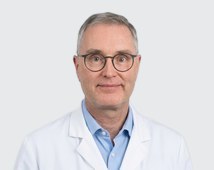
Professor Eberhard Barth is head of the Interdisciplinary Surgical Intensive Care Unit (Interdisziplinäre Operative Intensivstation, IOI) in the Department of Anaesthesiology and Intensive Care Medicine at Ulm University Hospital (Universitätsklinikum Ulm). His unit cares for critically ill patients after major operations on the heart, brain, blood vessels and abdomen and after severe injuries, around the clock.
What Professor Barth treats
The unit Professor Barth heads treats around 2000 patients a year in 32 intensive care beds, aged from 3 to 99. Patients come:
- after general and abdominal surgery;
- after neurosurgery, including in children;
- after heart, vascular and chest surgery;
- after injuries and urological operations;
- if needed, from ENT, gynaecology, haemato-oncology and dermatology.
His fields include pain and delirium (sudden confusion) in critically ill patients. With Professor Steffen Walter he leads a study funded by the German Research Foundation (DFG) that measures pain in awake patients after surgery through skin resistance, circulation, facial expression and video, aiming at an AI algorithm for reliable pain assessment. On delirium, he says treatment starts, where possible, with its causes, while medication can ease agitation and restore the sleep-wake rhythm. See also our pages on pain treatment and neurosurgery.
Training and experience
Professor Barth is a specialist (Facharzt) in anaesthesiology with additional qualifications in emergency medicine, specialised intensive care and specialised pain therapy. He is a senior physician (Oberarzt) and a member of the department’s extended leadership. In 2022 the hospital described him as one of two medical heads of the IOI; he now leads it.
The department and hospital
The unit offers all modern intensive care treatments, including organ support such as continuous dialysis and ECMO (a machine that takes over the work of the lungs, or of the heart and lungs), and advanced monitoring from pulmonary artery catheters and cardiac ultrasound to continuous EEG. It is part of the hospital’s ARDS/ECMO centre and runs a tele-ICU service, discussing critically ill patients with partner hospitals and arranging transfers to Ulm.
Complex decisions are made jointly, supported by ethics rounds from Ulm University’s Institute of the History, Theory and Ethics of Medicine, and the patient’s wishes come first. Families are asked to name one contact person for the medical team. More about the hospital: University Hospital Ulm.
Frequently asked questions
What conditions does Professor Barth treat?
Professor Barth’s unit treats patients who need intensive care after major surgery: operations on the heart, blood vessels, brain or abdomen, severe injuries and urological procedures. It is part of the centre for severe lung failure (ARDS) and ECMO, and its research covers delirium, pain relief, sedation and muscle weakness.
How can I see Professor Barth from abroad?
Intensive care is not booked in advance: patients come to the unit after surgery at Ulm University Hospital or by transfer from another hospital, arranged between doctors. For a planned operation in Ulm, AlenMed translates your records into German and forwards your request to the relevant department, which confirms a date and decides who treats you.
How much does treatment with Professor Barth cost?
The hospital sets the amount in a written estimate (Kostenvoranschlag) prepared before you travel. It depends on the examinations, the operation and whether, and for how long, intensive care is needed afterwards, so there is no single price. Payment goes directly to the hospital.
How to see Professor Barth through AlenMed
AlenMed translates your medical records into German, agrees a date with the hospital and, if needed, arranges a medical interpreter and personal support. To start, send a request through our form.
This information is for reference only and is not an offer. A doctor decides whether and how to treat after an in-person examination.