 EN
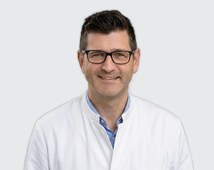
Professor Daniel Rothamel (Prof. Dr. med. Dr. med. dent. Daniel Rothamel) is chief physician of the Department of Oral and Maxillofacial Surgery (Klinik für Mund-, Kiefer- und Gesichtschirurgie) and medical director of the Johanniter-Krankenhaus Bethesda in Mönchengladbach. Patients see him above all for malignant head and neck tumours, the department’s main focus, and for cleft lip and palate, bite problems and facial fractures.
What Professor Rothamel treats
Professor Rothamel is a maxillofacial surgeon and oral surgeon qualified in plastic surgery. His own focus includes dental implants, sinus lifts (building up upper-jaw bone by the maxillary sinus) and jaw bone augmentation. His department treats:
- mouth cancer: tumour and neck lymph nodes are removed and the defect rebuilt in the same operation with microsurgical tissue from the forearm, thigh, lower leg or back;
- all fractures of the facial skeleton, with lower jaw fractures usually operated on as emergencies;
- severe bite problems: with an orthodontist, the jaws are repositioned through the mouth, leaving no visible scars;
- cleft lip, jaw and palate: children are followed into young adulthood with paediatric, orthodontic, ENT and speech specialists;
- jaw necrosis, including after bone-strengthening drugs, with surgical removal of dead bone;
- oral surgery for high-risk patients such as those on blood thinners, CO2 laser treatment, implants and bone grafting.
Read more on our maxillofacial surgery and oncology pages.
Training and experience
Daniel Rothamel grew up in Ratingen and studied in the Rhineland. After posts including Cologne and Sydney, he was senior consultant and deputy director of oral and maxillofacial surgery at University Hospital Düsseldorf. Since 1 July 2017 he has headed Bethesda’s maxillofacial surgery department, which dates back to 1959.
He is a specialist (Facharzt) in oral and maxillofacial surgery and a specialist dentist (Fachzahnarzt) in oral surgery, qualified in plastic surgery, and is now also medical director (Ärztlicher Direktor) of the whole hospital.
Where Professor Rothamel practises
Professor Rothamel practises in the maxillofacial department of the Johanniter-Krankenhaus Bethesda in Mönchengladbach, which has up to 49 beds, and in the outpatient centre (MVZ) next to it, which he also leads. Head and neck tumours are treated by surgeons, oncologists, radiotherapists, radiologists, pathologists and psycho-oncologists together; after mouth cancer surgery patients usually stay about 14 days, with at least five years of follow-up at the MVZ.
Each year his team cares for about 200 children with cleft lip, jaw and palate.
Frequently asked questions
What conditions does Professor Rothamel treat?
Professor Rothamel treats malignant tumours of the mouth, facial skin and other parts of the head and neck, cleft lip and palate in children, severe bite problems, facial fractures and jaw necrosis. His department also places dental implants, including after bone grafting.
How can I see Professor Rothamel from abroad?
Send the hospital a request with your records: discharge letters, CT or MRI images with reports and any biopsy result. AlenMed translates them into German and forwards the request; the hospital confirms a consultation date and decides which of its doctors sees you and operates.
How much does treatment with Professor Rothamel cost?
The exact amount is set by the hospital in a written estimate (Kostenvoranschlag) before you travel. It depends on the examinations and treatment: tumour surgery with about two weeks in hospital, corrective jaw surgery with three to five days and dental implants are priced differently. Payment goes directly to the hospital.
How to see Professor Rothamel through AlenMed
AlenMed translates your medical reports, including imaging and pathology, into German, agrees a date with the hospital and, if needed, arranges a medical interpreter and personal support. To start, send a request through our form.
This information is for reference only and is not an offer. A doctor decides whether and how to treat after an in-person examination.