 EN
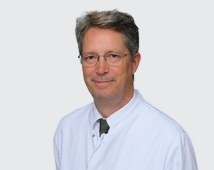
Professor Claus Cursiefen is director of the Centre for Ophthalmology (Zentrum für Augenheilkunde) at Cologne University Hospital (Uniklinik Köln). A cornea specialist, he sees patients whose cornea, the clear front surface of the eye, has become cloudy, thin or misshapen and may need a transplant.
What Professor Cursiefen treats
Professor Cursiefen is an ophthalmologist (Facharzt für Augenheilkunde) with the European Board diploma (FEBO). In Cologne he introduced new operations that replace diseased parts of the cornea with donor tissue more selectively and gently. For corneal disease, the centre offers:
- DMEK, replacing only the inner corneal layer, for Fuchs dystrophy, corneal failure after complicated cataract surgery and pseudoexfoliation syndrome, without stitches;
- DALK, replacing the front of the cornea for scars and distortion, as in keratoconus;
- cross-linking with riboflavin and UV light to slow keratoconus in stages I and II;
- full-thickness corneal transplants where nothing else will work;
- transplants combined with cataract or glaucoma surgery.
Read more on our ophthalmology page.
Training and experience
Claus Cursiefen studied medicine in Regensburg and Würzburg (1988–1995), worked in Erlangen (1995–2001), qualified as an ophthalmologist in 2001 and did research at Harvard Medical School’s Schepens Eye Research Institute in Boston (2002–2004). In 2003 he completed his habilitation, the German qualification for professorship, on vessel growth in the cornea.
From 2004 to 2010 he was a consultant in Erlangen, heading its cornea clinic and cornea bank, then professor of cornea and anterior segment there (2010–2011); he has led the Cologne centre since 2011. He was president of the German Ophthalmological Society (DOG) in 2018–2020, has been the University of Cologne’s vice-rector for research since 2023 and is a member of the Leopoldina, Germany’s national academy.
The department and hospital
The centre treats all kinds of eye disease with medication and surgery, using all modern lamellar corneal transplant techniques (DMEK, DSAEK, DALK) and laser vision correction (LASIK). It has its own cornea bank and performed more than 1,000 corneal transplants in 2024.
Specialist units cover the retina, glaucoma, the cornea, oculoplastic surgery and eye tumours, and squint, alongside paediatric eye surgery and keratoconus centres. The Eye Center at Cologne University Hospital is part of Uniklinik Köln.
Frequently asked questions
What conditions does Professor Cursiefen treat?
Professor Cursiefen mainly treats corneal disease and, with Professor Björn Bachmann, has performed more than 7,000 DMEK operations. His centre treats Fuchs dystrophy, keratoconus, corneal scars after infection, herpes keratitis, chemical burns and eye injuries, and his private clinic also covers cataract, glaucoma and laser surgery.
How can I see Professor Cursiefen from abroad?
Gather your ophthalmologist’s reports and previous eye test results. AlenMed translates them into German and forwards your request; the hospital confirms a date and decides which doctor examines you and operates. After a corneal transplant, regular check-ups with an ophthalmologist are needed.
How much does treatment with Professor Cursiefen cost?
The hospital sets the exact amount in a written estimate (Kostenvoranschlag) before you travel. It depends on the examination and treatment: cross-linking, a partial transplant and a transplant combined with cataract surgery are priced differently. Payment goes directly to the hospital.
How to see Professor Cursiefen through AlenMed
AlenMed translates your ophthalmologist’s reports and test results into German, agrees a date with the hospital and, if needed, arranges a medical interpreter and personal support. To start, send a request through our form.
This information is for reference only and is not an offer. A doctor decides whether and how to treat after an in-person examination.