 EN
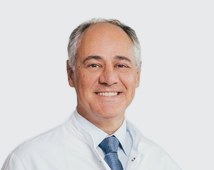
Professor Marcos Tatagiba is chief physician and medical director of the University Department of Neurosurgery (Universitätsklinik für Neurochirurgie) at Tübingen University Hospital and head of its Department of Neurosurgery and Neurotechnology. His department specialises in complex skull base, pituitary and cerebrovascular surgery and in brain tumour surgery, and also treats spinal and peripheral nerve conditions.
What Professor Tatagiba treats
Professor Tatagiba is a neurosurgeon and holds the Chair of Neurosurgery at the University of Tübingen. His department’s main areas include skull base and pituitary surgery, brain tumour surgery – including awake operations – vascular and bypass surgery, and epilepsy and peripheral nerve surgery. It treats:
- tumours of the brain, pituitary gland and skull base, including vestibular schwannoma (a benign tumour of the hearing and balance nerve);
- aneurysms and other malformations of the brain’s blood vessels, and moyamoya disease (narrowing of brain arteries);
- hydrocephalus (excess fluid in the brain’s cavities) and syringomyelia;
- epilepsy, neurofibromatosis and facial nerve palsy;
- slipped discs, spinal canal stenosis and nerve compression.
For background, see our pages on neurosurgery and oncology in Germany.
Training and experience
Professor Tatagiba is full professor and holder of the C4 Chair of Neurosurgery at Eberhard Karls University of Tübingen. At Tübingen University Hospital he is chief physician and medical director of the neurosurgery department and head of the Department of Neurosurgery and Neurotechnology, which unites his department and the Institute for Neuromodulation and Neurotechnology.
The department he leads trains neurosurgeons internationally: with the World Federation of Neurosurgical Societies (WFNS) it awards three four-month scholarships a year to young neurosurgeons from developing countries, and it runs the ATCHYN exchange programme with the Brazilian Academy of Neurosurgery.
The department and hospital
The neurosurgery department performs 3,000 operations a year and has 5 operating theatres and 57 beds. Beyond surgery, its work includes neurosurgical intensive care, neurophysiology, pain treatment and imaging during operations. The paediatric neurosurgery section works with the University Department of Paediatrics and Adolescent Medicine.
Its neuro-oncology clinic belongs to the Centre for Neuro-oncology at the CCC Tübingen-Stuttgart cancer centre, and the Institute for Neuromodulation and Neurotechnology uses techniques such as deep brain stimulation. More about the hospital: Tübingen University Hospital.
Frequently asked questions
What conditions does Professor Tatagiba treat?
Patients come to Professor Tatagiba’s department with tumours of the brain, pituitary gland and skull base, such as vestibular schwannoma, with aneurysms and other malformations of brain vessels, moyamoya disease, hydrocephalus, and epilepsy when surgery is being considered. It also operates on slipped discs, spinal canal stenosis and nerve compression, and treats children in its paediatric section.
How can I see Professor Tatagiba from abroad?
Start by preparing your documents: in most cases the department asks for recent MRI scans on CD or a valid QR code, plus copies of reports – radiology, neurology, eye examinations and laboratory results. AlenMed translates the documents into German and forwards your request; the hospital confirms a date and decides which of the department’s doctors sees you and operates.
How much does treatment with Professor Tatagiba cost?
The exact amount is set by the hospital in a written estimate (Kostenvoranschlag) prepared before you travel. It depends on the examinations and the operation: removing a skull base tumour, spinal surgery and treatment for hydrocephalus are priced differently, and complex operations may require intensive care. Payment goes directly to the hospital.
How to see Professor Tatagiba through AlenMed
AlenMed translates your records and imaging reports into German, agrees a date with the hospital and, if needed, arranges a medical interpreter and personal support. To start, send a request through our form.
This information is for reference only and is not an offer. A doctor decides whether and how to treat after an in-person examination.