 EN
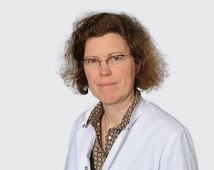
Dr Julia Fricke is an ophthalmologist who heads the strabismus and neuro-ophthalmology service (Schwerpunkt Strabologie und Neuroophthalmologie) at the Centre for Ophthalmology of Cologne University Hospital (Zentrum für Augenheilkunde der Uniklinik Köln). Patients see her about squint, double vision, eye tremor and other eye movement disorders, as well as visual field loss and optic nerve disease.
What Dr Fricke treats
Dr Fricke leads the service that diagnoses and treats squint (strabismus) and neurological problems of vision and eye movement; neuro-ophthalmology covers disorders of the optic nerve and visual pathways linked to the nervous system. The service treats:
- congenital and acquired squint, including eye muscle surgery;
- amblyopia (lazy eye);
- double vision (diplopia) and compensatory head posture;
- nystagmus (involuntary eye tremor) and eye movement disorders after injury or inflammation or caused by nerve disease;
- visual pathway disorders with visual field loss and pupil problems, and hereditary optic nerve diseases such as Leber hereditary optic neuropathy (LHON);
- thyroid eye disease (endocrine orbitopathy), ocular myasthenia and other eye muscle disorders;
- congenital and acquired eyelid malposition, corrected surgically.
See also our page on ophthalmology in Germany.
Training and experience
Dr Fricke is a specialist (Fachärztin) in ophthalmology and is also on the ophthalmology team of the hospital’s outpatient centre (MVZ). Besides leading her service, she is deputy head of the centre’s vocational school for orthoptics (Berufsfachschule für Orthoptik), which trains state-certified orthoptists: specialists who assess squint, amblyopia and problems with how the eyes work together and treat them without surgery.
The department and hospital
Cologne University Hospital’s Centre for Ophthalmology treats all kinds of eye disease, medically and surgically. It is divided into subspecialties with specialists for every group of eye diseases, rare ones included, and has centres for rare eye diseases and paediatric eye surgery.
The ophthalmology unit of the hospital’s outpatient medical care centre (MVZ) works closely with the centre. More about the Eye Center at Cologne University Hospital.
Frequently asked questions
What conditions does Dr Fricke treat?
Dr Fricke treats congenital and acquired squint, amblyopia, double vision, nystagmus and other eye movement disorders. Her service also deals with diseases of the visual pathway and optic nerve, including hereditary ones, thyroid eye disease and ocular myasthenia; the centre operates on squint and on eyelid malposition.
How can I see Dr Fricke from abroad?
First gather your ophthalmologist’s reports, a neurologist’s reports if you have them, results of vision and visual field tests, and imaging reports. AlenMed translates them into German and forwards your request; the hospital confirms a date and decides which of the department’s doctors examines and treats you.
How much does treatment with Dr Fricke cost?
The exact amount is set by the hospital in a written estimate (Kostenvoranschlag) prepared before you travel. It depends on the examinations and treatment: a consultation, diagnostic tests and eye muscle surgery are priced differently. Payment goes directly to the hospital.
How to see Dr Fricke through AlenMed
AlenMed translates your records into German, agrees a date with the hospital and, if needed, arranges a medical interpreter and personal support. To start, send a request through our form.
This information is for reference only and is not an offer. A doctor decides whether and how to treat after an in-person examination.