 EN
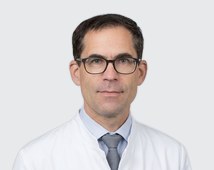
Professor Jörg Albert is medical director of the Department of Gastroenterology, Gastrointestinal Oncology, Hepatology and Infectious Diseases (Klinik für Gastroenterologie, gastrointestinale Onkologie, Hepatologie und Infektiologie) at Klinikum Stuttgart. Patients see him with diseases of the stomach, bowel, liver, bile ducts and pancreas, including digestive cancers.
What Professor Albert treats
Professor Albert is a gastroenterologist specialising in endoscopy, using flexible camera instruments. His clinical interests are removing growths endoscopically, ERCP (examining and treating the bile and pancreatic ducts), small-bowel endoscopy and new techniques. His department offers:
- endoscopic removal of early cancers throughout the digestive tract;
- POEM, an endoscopic muscle cut for achalasia (a swallowing disorder);
- endoscopy of the bile ducts and pancreas, including ERCP and endoscopic ultrasound, and photodynamic therapy for bile duct tumours;
- stents throughout the digestive tract and gallstone lithotripsy;
- chemotherapy and immunotherapy for digestive and neuroendocrine tumours.
See our gastroenterology and oncology pages.
Training and experience
Jörg Albert studied medicine in Homburg and Heidelberg, where his doctoral thesis compared MRCP and ERCP, two methods of imaging the bile ducts. He completed his habilitation, the German professorial qualification, in Halle with work on new methods of small-bowel endoscopy. He is a specialist in internal medicine and gastroenterology with an additional qualification in cancer drug therapy.
From 2008 to 2016 he was leading senior physician and head of the interdisciplinary endoscopy department at Frankfurt University Hospital, and in January 2023 he took over the department at Klinikum Stuttgart. He sits on the board of the German Society for Gastroenterology (DGVS) for health economics (2026–2028).
The department and hospital
The department works at two sites of Klinikum Stuttgart, Katharinenhospital and Krankenhaus Bad Cannstatt, treating digestive, metabolic and nutritional disorders. It names particular expertise in digestive cancers, hepatology, infectious diseases, inflammatory bowel disease and endoscopic treatment of tumours.
Tumours are treated together with the Stuttgart Cancer Center and its centres certified by the German Cancer Society (DKG). There is an interdisciplinary liver centre and a board for patients of all ages with Crohn’s disease or ulcerative colitis; the department also treats tuberculosis and discusses cases daily with visceral surgeons.
Frequently asked questions
What conditions does Professor Albert treat?
Professor Albert treats diseases of the oesophagus, stomach, bowel, liver, bile ducts and pancreas: early tumours removable endoscopically, bile duct tumours and stones, achalasia and digestive cancers. His department also treats cirrhosis, hepatitis, Crohn’s disease and ulcerative colitis.
How can I see Professor Albert from abroad?
Prepare your reports, gastroscopy and colonoscopy findings, and any ultrasound, CT, MRI and histology results. AlenMed translates them into German and forwards your request; the hospital confirms a date and decides which of its doctors sees you.
How much does treatment with Professor Albert cost?
The exact amount is set by the hospital in a written estimate (Kostenvoranschlag) prepared before you travel. It depends on the examinations and treatment: endoscopic tumour removal, ERCP and chemotherapy are priced differently. Payment goes directly to the hospital.
How to see Professor Albert through AlenMed
AlenMed translates your records into German, agrees a date with the hospital and, if needed, arranges a medical interpreter and personal support. To start, send a request through our form.
This information is for reference only and is not an offer. A doctor decides whether and how to treat after an in-person examination.